

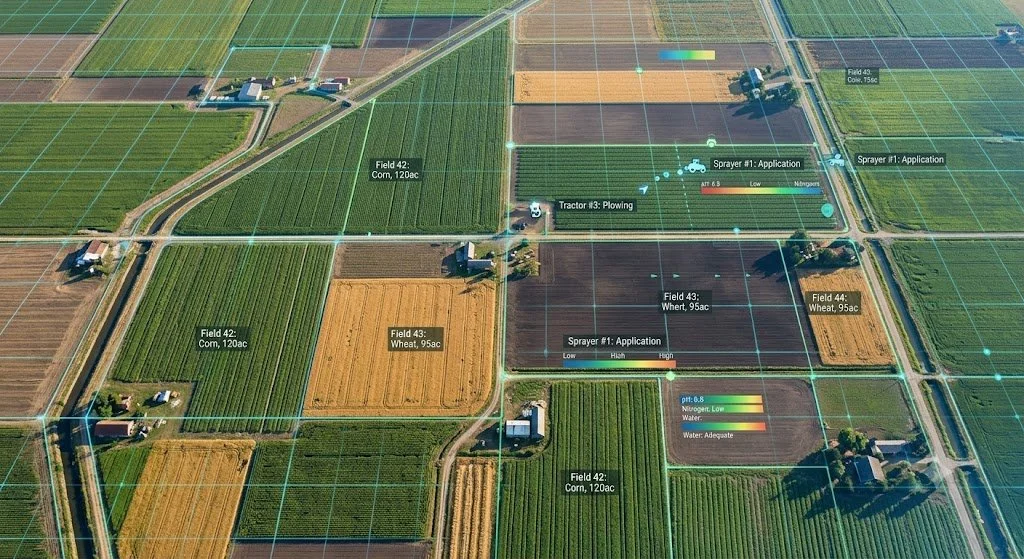
Navigating the New Era of Farmland Compliance: State Bans, AFIDA Overhauls, and Portfolio Risk
State-level bans and a proposed federal overhaul of AFIDA are reshaping farmland acquisitions. Discover how agricultural asset managers and investment teams can navigate evolving compliance requirements and protect portfolio transparency.
Beyond Appreciation: Strategic Farmland Leasing in a Stabilizing Market
With the U.S. farmland market transitioning from rapid growth to stability, institutional investors must pivot. Explore how strategic, data-backed leasing models protect capital and ensure long-term profitability.

Navigating Market Stabilization: Institutional Farmland Leasing
As the U.S. farmland market transitions from rapid appreciation to stabilization in 2026, institutional investors are adopting more strategic, data-centric leasing models. Success now hinges on regional analysis, meticulous documentation, and demanding lease structures.
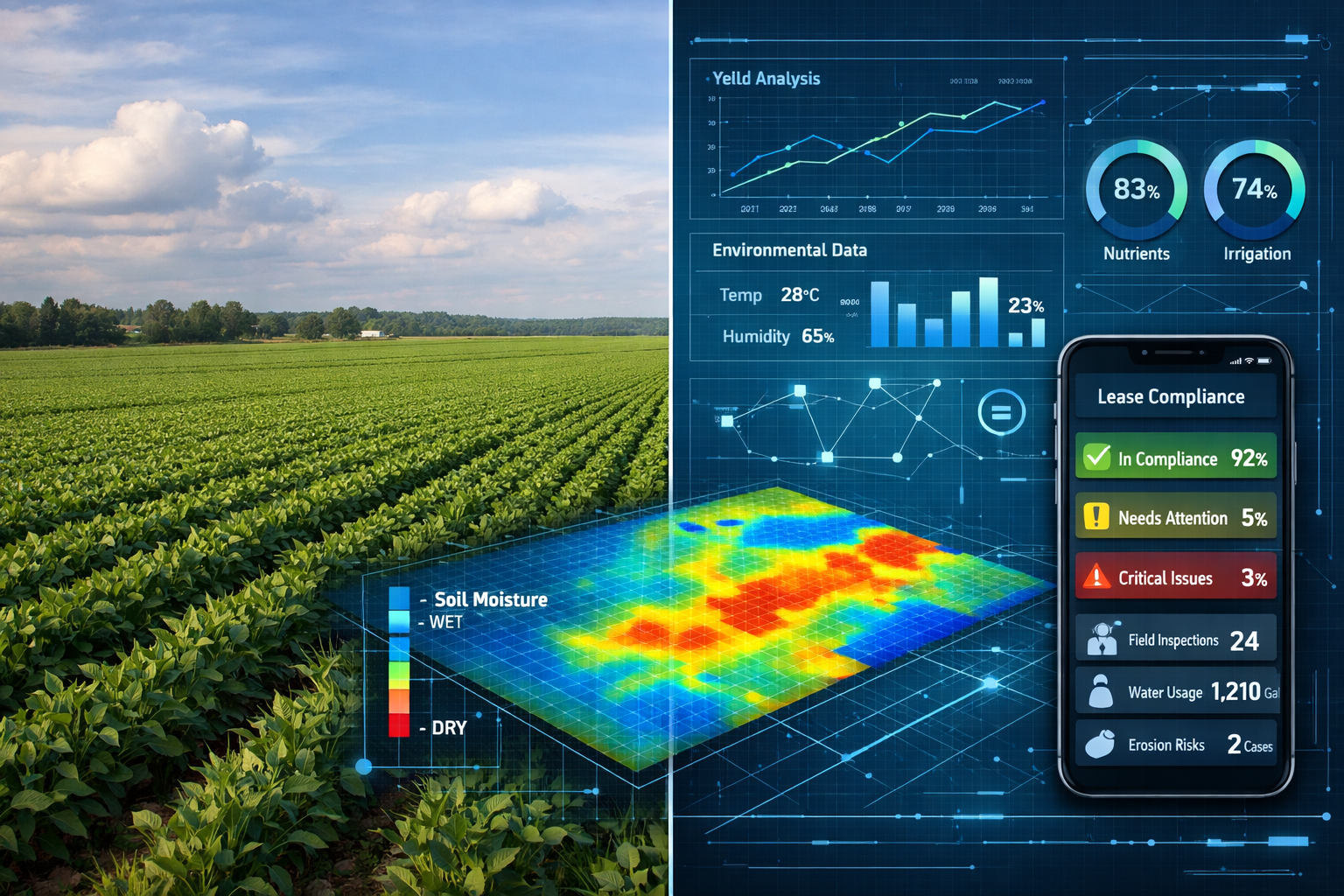
The Digital Evolution: Integrating AI into Farmland Leasing
By 2026, AI has transitioned from a novelty to an operational necessity in agriculture. This article explores how adopting standardized Decision Support Systems is transforming lease management into a proactive, data-driven strategy for better ROI.
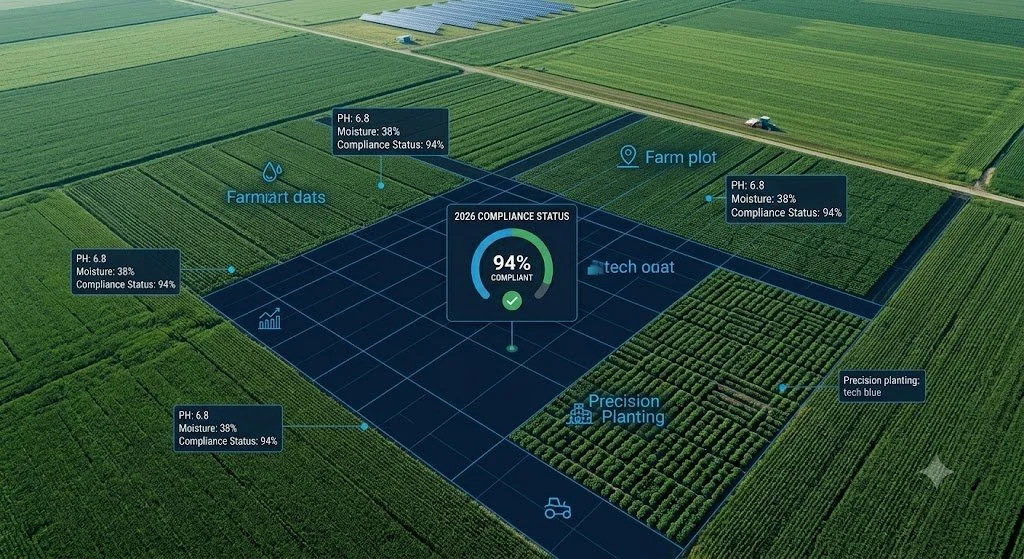
Navigating the 2026 Market: Strategic Farmland Leasing for Institutional Investors
The 2026 farmland market is experiencing a mature pullback, shifting from rapid appreciation to stabilization. This article examines how institutional investors can optimize leasing strategies to maintain performance and mitigate risk.
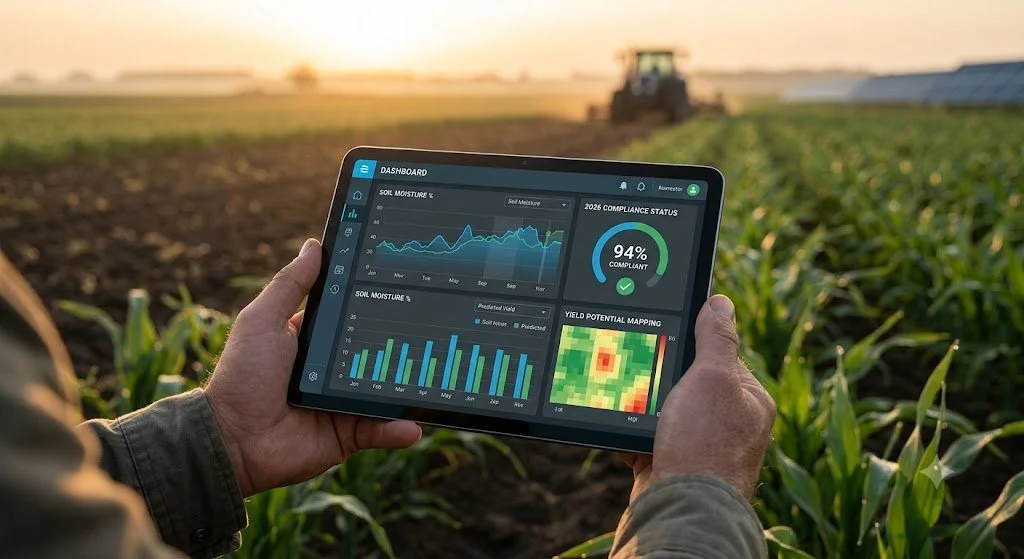
AI in Farmland Leasing: 2026 Compliance Guide
As the era of trust-based handshake leases fades, 2026 marks the rise of the "digital agronomist." This article explores how AI-integrated platforms are redefining farmland lease compliance, ensuring precision, and driving sustainable ROI.
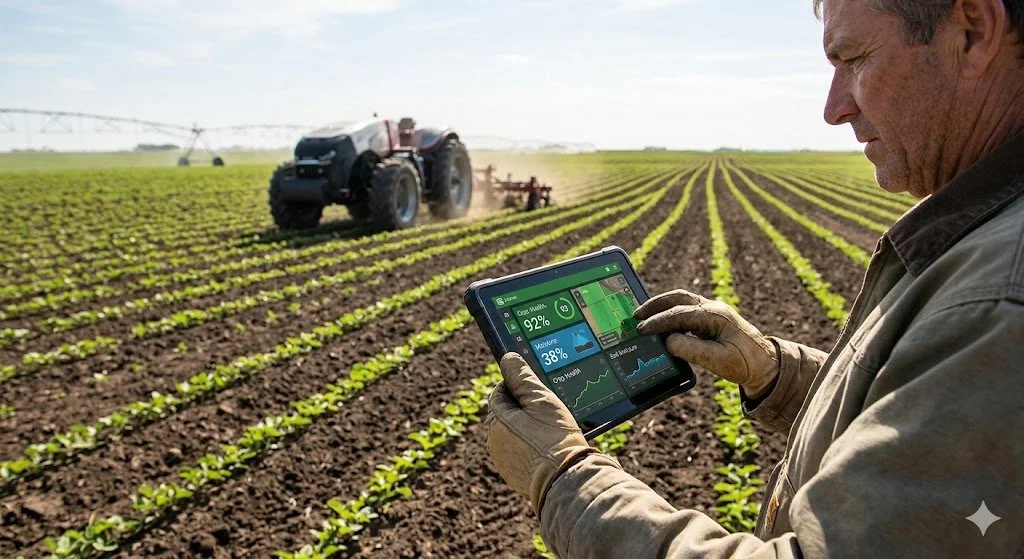
Transforming Decisions: How AI is Redefining Farmland Management
Agricultural AI has evolved from a novelty to an operational necessity in 2026. Learn how integrating data-driven decision support into your farmland leasing strategy can optimize resource allocation and profitability.

Navigating the New Landscape: Key Farmland Leasing Provisions in the 2026 Farm Bill and Succession Strategies
The Farm, Food, and National Security Act of 2026 offers crucial updates, particularly in expanding producer credit and promoting precision agriculture. For retiring landowners, these new federal programs are vital leverage points to structure flexible lease agreements that facilitate smooth farm transitions and succession planning.
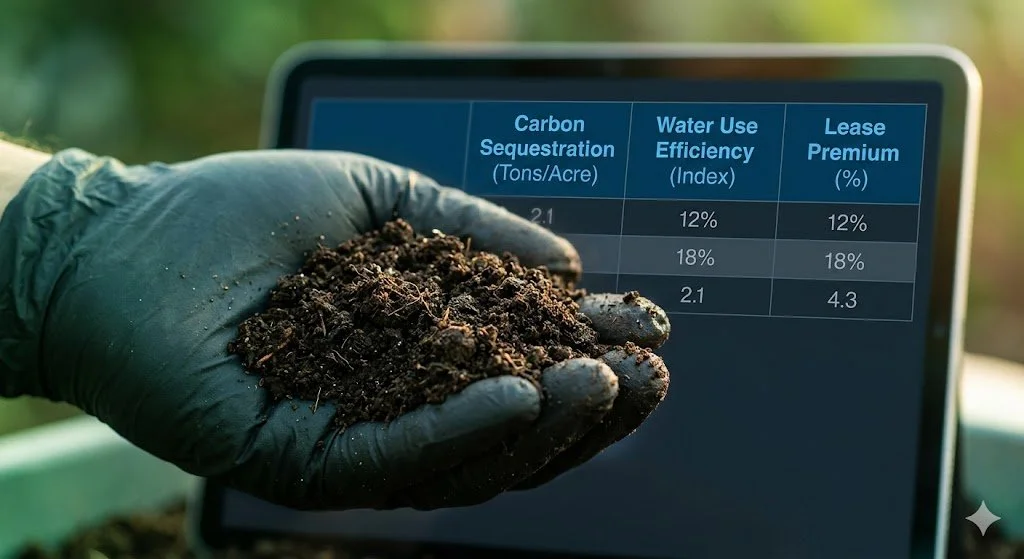
Beyond Yield: How Climate-Smart Leases and ESG Metrics are Reshaping Farmland Investment Portfolios
Institutional capital is increasingly prioritizing Environmental, Social, and Governance (ESG) criteria in investment decisions. For farmland, this translates into a rising demand for climate-smart lease agreements that actively tie financial incentives to ecological performance, moving beyond simple cash rent to holistic value creation.

Shaking Up the Handshake: What Drives Flexible Farmland Leases in Iowa?
The article analyzes a 20-year dataset from the Iowa Farmland Ownership and Tenure Survey (conducted by Cornell and Iowa State University) to explore the shifting dynamics of agricultural leasing structures.
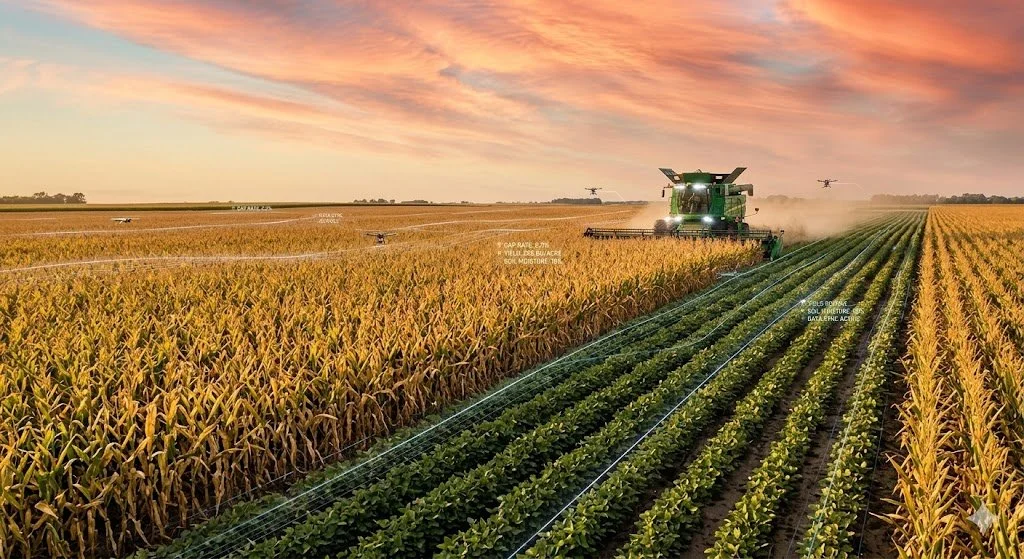
Returns, Risks, and Legacies: Shifting Dynamics in Midwest Farmland Investing
As outside investors grow and cap rates tighten to 2%–2.4%, the Midwest farmland market is shifting from short-term cash flow to long-term capital appreciation. Discover the 5 modern buyer profiles, the "sticky" reality of cash rents, and how efficiency tech is defending operator margins.
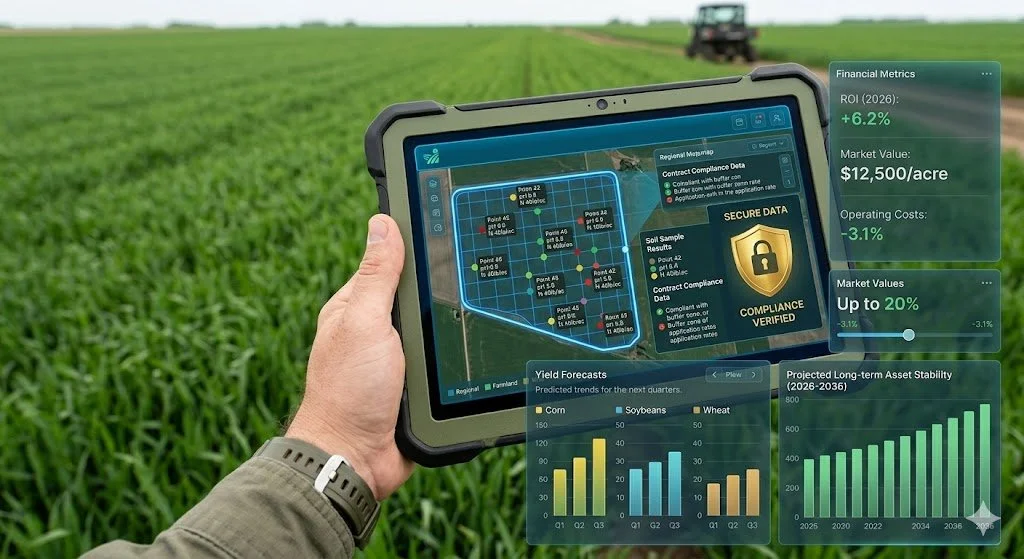
Beyond the Spreadsheet: Leveraging AI for Precision and Compliance in Farmland Leasing
In 2026, AI is transforming farmland management by focusing on business analysis and compliance, not just agronomy. Landowners and managers must adopt standardized Decision Support Systems (DSS) to integrate field data directly into lease oversight, ensuring precision, compliance, and risk mitigation.
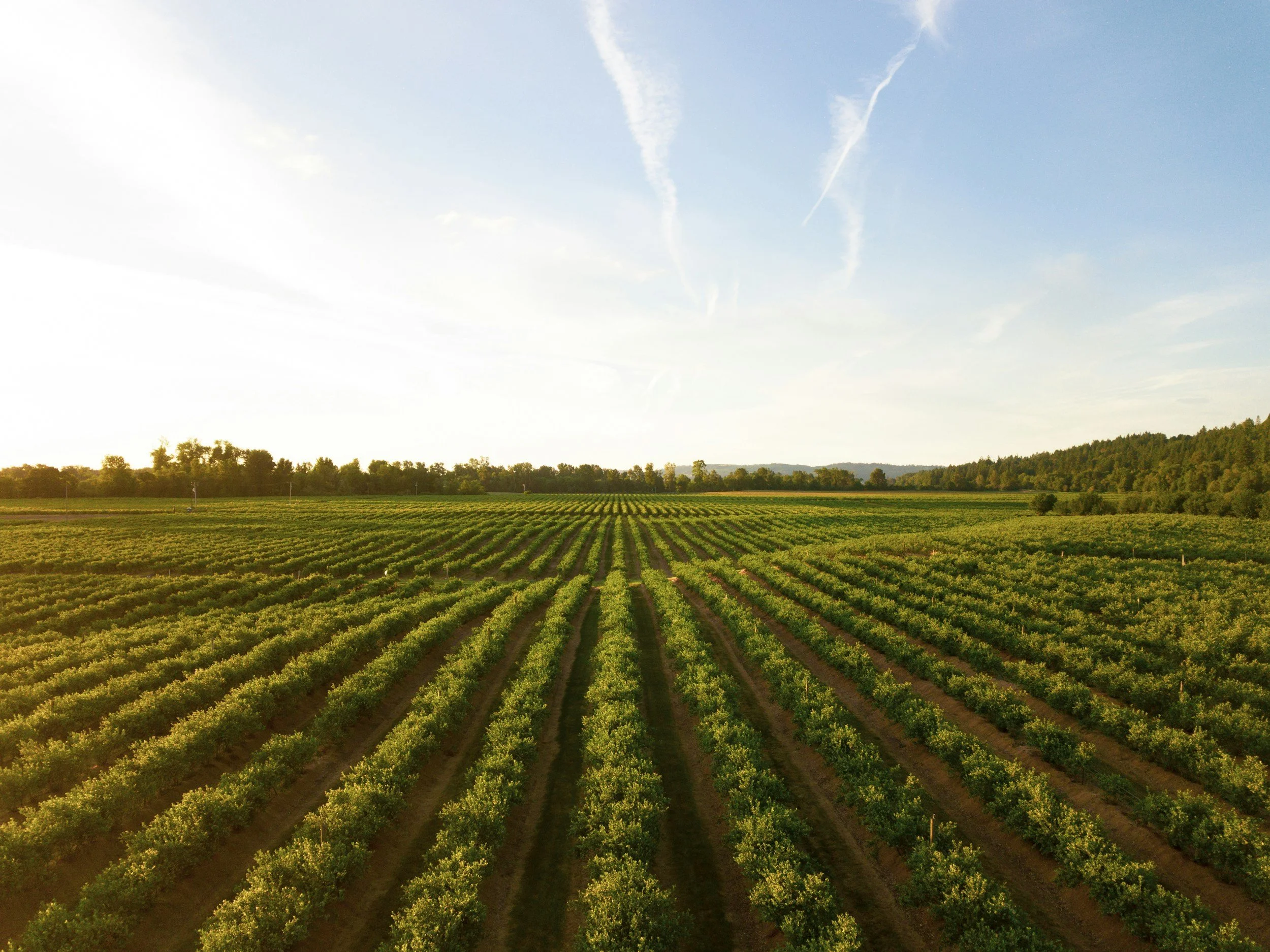
Farmland 2026: The Shift from "Hype" to Fundamentals
The agricultural land market is undergoing a "mature pullback." After the record-breaking transaction volumes of 2021 and 2022, the market is normalizing. While the broader U.S. economy is showing resilience against recession, farmland values are now being dictated by two primary factors: input-energy correlations and resource security.
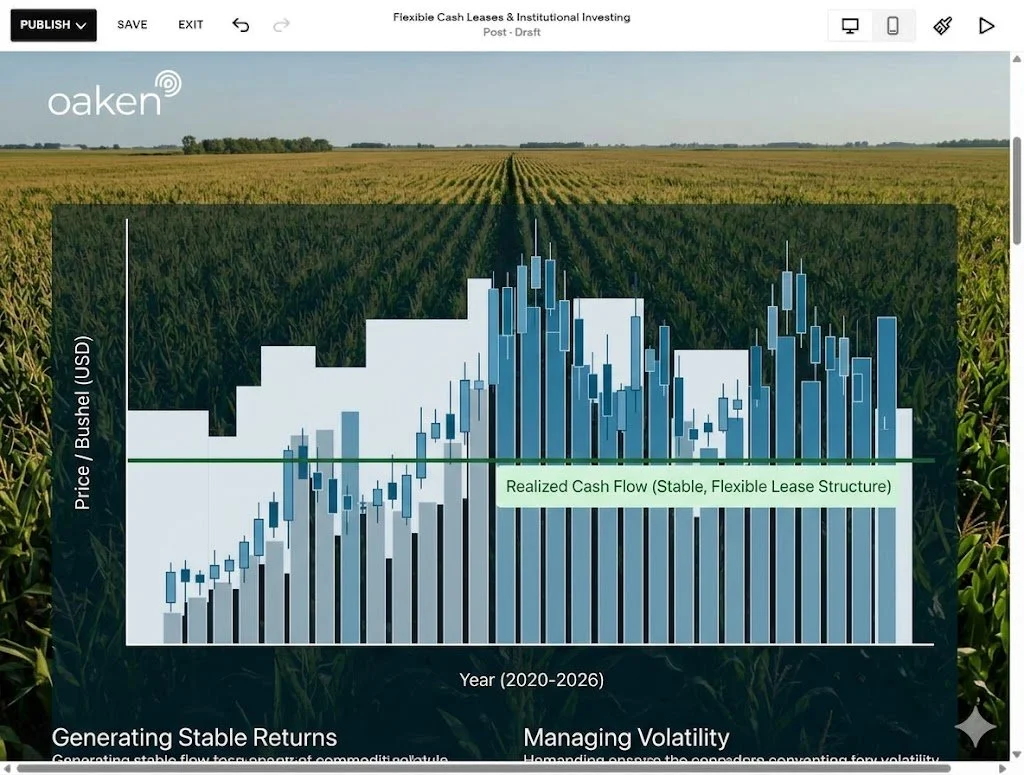
Flexible Cash Leases & Institutional Investing
With US farm margins facing a squeeze in 2026, the traditional fixed cash lease is increasingly unsuitable for strategic risk sharing. Institutional investors are pivoting toward flexible cash and flex-hybrid agreements to protect downside risk while capturing upside potential, stabilizing cash flow in a volatile market.
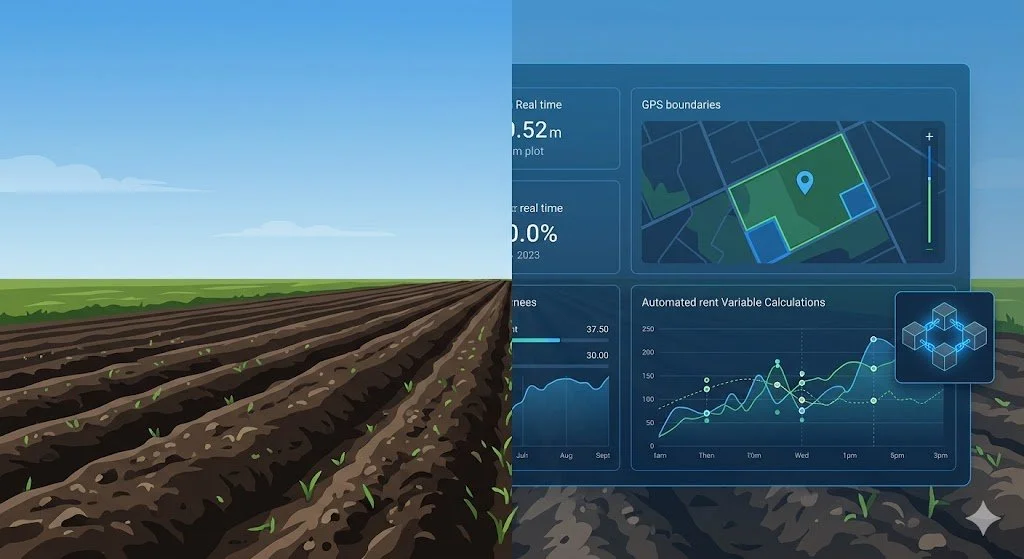
The Digital Foundation for Leasing
By 2026, digital platforms are projected to govern over a third of new farm leases, fundamentally reshaping how landowners and operators manage risk and compliance. Technology is moving farmland agreements from retrospective paperwork to proactive, data-driven systems, offering unparalleled efficiency and transparency.
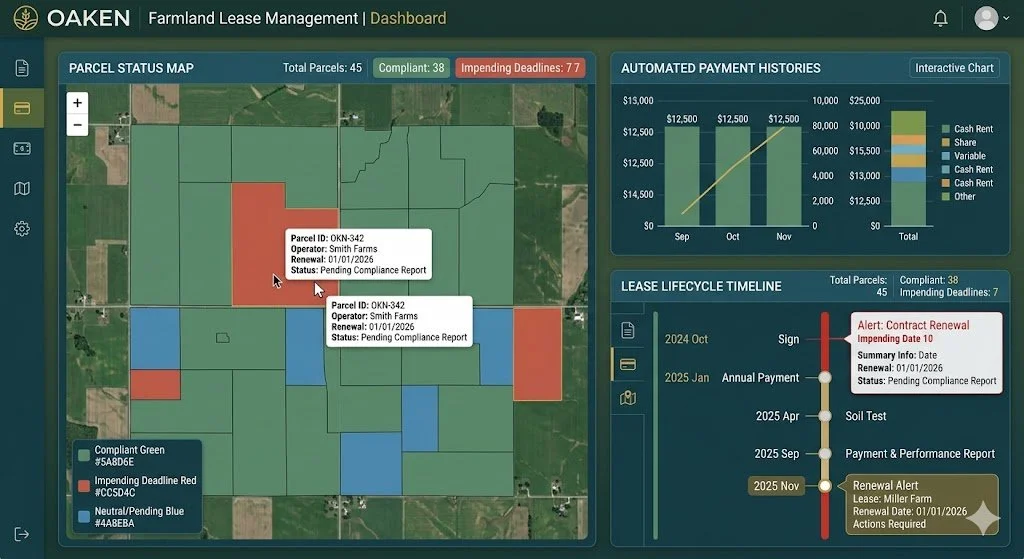
Beyond Spreadsheets: Digital Platforms as the New Standard for Farmland Lease Compliance
Transition from manual spreadsheets to digital platforms for centralized farmland lease management. Automate payments, track compliance, and reduce administrative risk.

The Cash Rent Reality Check: Mastering Flexible Lease Structures for 2026 Profitability
Faced with low commodity prices and high input costs, 2026 margins are forcing landowners and operators to reconsider traditional fixed cash rents. Flexible cash lease agreements offer a necessary alternative, allowing rent to adjust based on real-world yields and market prices, promoting fairness and stability for both parties.

Digitalizing the Lease Lifecycle: Leveraging FMS for Real-Time Compliance and Performance Metrics
Traditional, paper-based leasing can no longer keep pace with the demands of modern agriculture, especially concerning real-time compliance and performance monitoring. Leveraging farm management software (FMS) allows landowners and farm managers to move from retrospective reporting to proactive, real-time digital compliance, verifying operational metrics directly from the field. This digitalization drives efficiency, mitigates risk, and builds a foundation of transparency essential for modern farm partnerships.
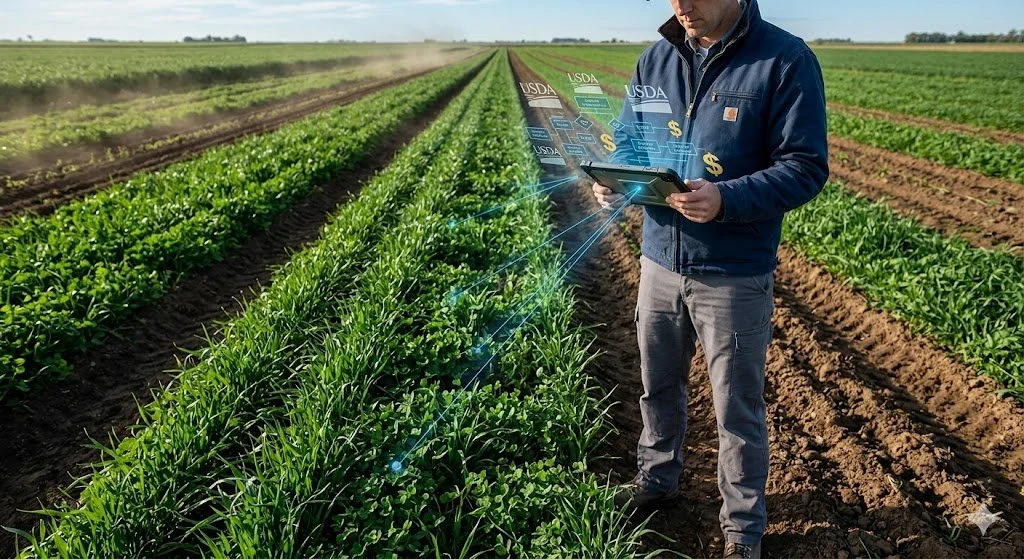
The Policy Pivot: How the 2026 Farm Bill is Redefining Farmland Rental Structures
The 2026 Farm Bill reauthorization is poised to significantly expand support for climate-smart practices and precision agriculture. For farm managers and landlords, this means leases must now explicitly define roles, responsibilities, and cost-sharing for federal conservation programs like CSP and EQIP to maximize financial access.
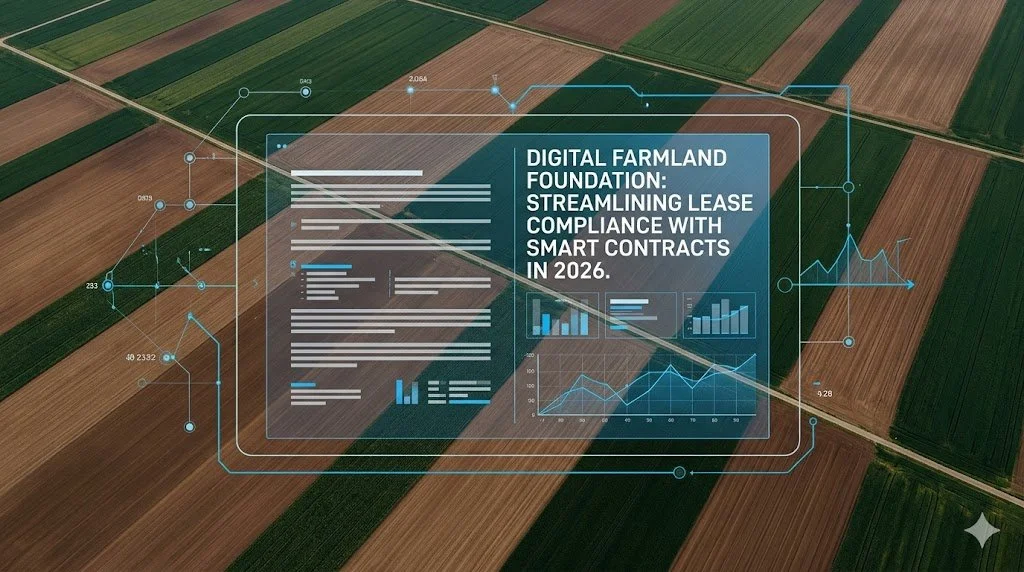
The Digital Farmland Foundation: Streamlining Lease Compliance with Smart Contracts in 2026
By 2026, technology is predicted to govern over a third of new farm leases. Digital platforms are shifting lease management from paper files to real-time, data-driven compliance systems, offering unparalleled transparency and operational efficiency for institutional investors and farm managers alike.