

Farm lease records and succession planning for landowners
Your land’s income history, always ready. For taxes. For heirs. For every lender question.
Your farm leases aren’t paperwork. They’re the financial memory of your land. Kept in one place, they make tax season a non-event, give your heirs a complete income story instead of a drawer of papers, and show you exactly what your land earns.
- Every lease, every payment, every acre
- Tax-ready and heir-ready
- Share access with your CPA, attorney and family
Why it matters
Neglected leases turn every transition into an expensive guessing game
Kept together, lease records are an asset. Scattered across a drawer, a truck console and one person’s memory, they become a cost the next time something changes.
Sources: USDA NASS, 2024 TOTAL survey release (Mar 12, 2026) · USDA NASS, 2024 TOTAL executive briefing · USDA NASS, Farmland Ownership and Tenure highlights
Tax-ready and heir-ready
Pass the land. Pass the data. Pass the proof.
A well-kept lease record connects today’s rent check to tomorrow’s tax return, estate plan, lender conversation and family transition.
Tax time without the scramble
Every rent payment, expense and improvement logged through the year is ready for Form 4835 and your 1099-MISC paperwork. No reconstructing rent rolls in April.
- Substantiate every deduction with the receipt kept next to the lease it belongs to
- Classify income correctly: cash rent is generally Schedule E, crop-share rent without material participation is Form 4835, and Schedule F applies if you materially participate
- Exact payment totals, not estimates: match the 1099s tenants send you to the rent you received, and issue your own with real numbers
Succession without the fog
Heirs inherit the data, not just the deed: lease terms, payment history, tenant relationships and land improvements. The next generation, who expects everything digital, gets a complete picture instead of family folklore.
- Rental income keeps flowing through the transition, because renewal and notice dates are already written down
- Tenant relationships carry over with contacts, history and every conversation in one place
- One shared record for family, your attorney and your CPA, instead of one person’s memory
Wealth you can see and defend
A portfolio view of what each acre earns, plus the records that back up what your land is worth when it matters most.
- Basis records that support capital gains figures, and the carryover basis your family needs if land is gifted during your lifetime
- Stepped-up basis at inheritance is generally the fair market value at the date of death, so date-of-death values and appraisals belong in the record
- Documentation that backs valuations for estate planning, loan renewals and property-tax appeals
The 2-minute heir-ready check
If something happened tomorrow, could your family run the land’s finances?
Check every statement that’s true today. Your answers stay in your browser.
Your heir-ready score
Guessing game. Your heirs would be piecing this together.
How Oaken helps landowners
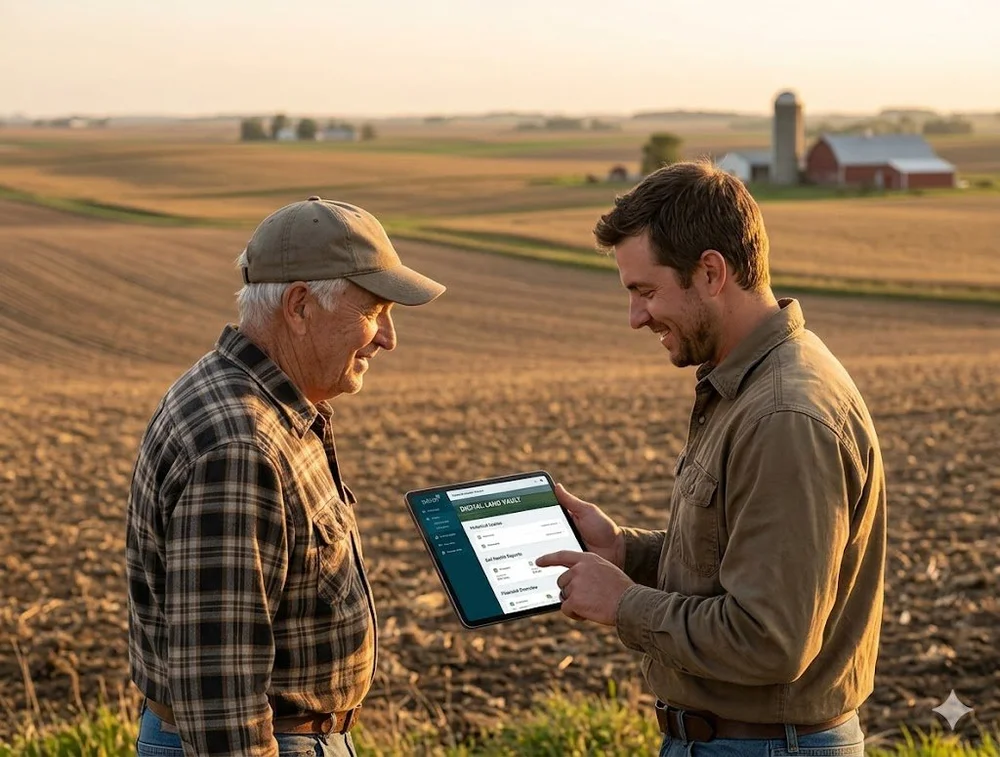
Your land’s digital vault: every lease, every payment, every acre
Oaken is farmland lease management software. It keeps the records behind your tax return, your estate plan and your tenant relationships in one secure place, and keeps them current as leases renew and rent comes in.
- Every lease in one placeCash, flex and crop-share leases with acres, terms and FSA numbers, plus deeds, soil maps and the handwritten notes you’ve kept for decades.
- Rent you can seeScheduled vs. paid rent on every lease, with a notice when rent is paid. No more chasing checks or wondering about a wire.
- Renewal remindersAlerts 90, 60 and 30 days before a lease renews, so notice deadlines never slip during a transition.
- Improvements and basisTile, wells, buildings and other improvements stored with each parcel, alongside the purchase and basis records behind them.
- Secure sharingGive your CPA, attorney or family members access, so everyone works from the same record.
- Rent in contextCompare your rents with county cash rent data to see what each farm earns and where a conversation with your tenant may be due.

Free guide for landowners
Tax-Time Ready: the land lease records checklist
- Sort every lease by type: cash, flex, crop share or paid in grain
- Match rent received to each farm and year, and check the 1099s you receive
- Keep crop insurance, USDA and CRP papers apart from rent
FAQ
Farm lease records, taxes and succession: questions landowners ask
Answers are educational and point to the IRS sources behind them: IRS Publication 225, Farmer's Tax Guide · IRS, About Form 4835 · IRS Publication 1099 (2026) · IRS Publication 551, Basis of Assets · IRS, How long should I keep records?.
What farm lease records should a landowner keep?
Keep each signed lease and amendment, a record of every rent payment received, the 1099s tenants send you, receipts for expenses and improvements such as tile, wells, fences and buildings, property tax bills, and the purchase, gift or inheritance records that set your basis. IRS Publication 225 covers how farm rental income and expenses are reported.
Where does a landowner report farm rent: Schedule E, Form 4835 or Schedule F?
Cash rent a landowner receives is generally rental income reported on Schedule E, according to IRS Publication 225. Crop-share or livestock-share rent is reported on Form 4835 when the landowner does not materially participate in operating the farm. A landowner who materially participates reports on Schedule F. Your tax preparer makes the call based on your lease and involvement.
What is the Form 1099-MISC threshold for farm rent paid in 2026?
IRS Publication 1099 (2026) says the minimum reporting threshold for certain payments, including rents, increased to $2,000 for tax years beginning after 2025, up from $600 for 2025. Keeping exact rent totals by tenant makes it easy to check the 1099s you receive.
How do lease records help with farm succession planning?
Your estate plan transfers ownership, but your heirs also need to keep the land earning. A complete record of lease terms, renewal and termination notice dates, payment history and tenant contacts lets the next generation step in without missing a notice deadline or a rent payment. Share it with your attorney and CPA as part of your farm succession plan.
What is stepped-up basis on inherited farmland?
IRS Publication 551 says the basis of property inherited from a decedent is generally its fair market value at the date of death, or on the alternate valuation date if the estate elects it. A special-use value may apply to real property used in farming if chosen for estate tax purposes. Land given as a gift during your lifetime generally keeps your adjusted basis, so your purchase and improvement records matter.
How long should landowners keep land and lease records?
The IRS says to keep records that support income or deductions until the period of limitations for that return runs out, commonly 3 years. Keep records relating to property until the period of limitations expires for the year you sell or otherwise dispose of it.
Is Oaken a tax, legal or estate planning service?
No. Oaken is farmland lease management software. It keeps your leases, rent payments, tenants, improvements and documents organized and shareable. Your CPA, attorney and lender still make the tax, legal and lending decisions.
Can my CPA, attorney or family see my records in Oaken?
Yes. You can give your CPA, attorney or family members secure access, so everyone works from the same record instead of copies and memory.
Build the record while the story is still yours to tell
Don’t leave your heirs an expensive guessing game.
Paperwork you skip today becomes the tax bill, the family dispute, or the discounted sale your heirs pay for tomorrow.
In 15 minutes, we’ll show you how Oaken keeps every lease, payment and acre tax-ready and heir-ready, and how your family, CPA and attorney can share the same record.
- A 15-minute walkthrough, no obligation
- Bring your questions about leases and transitions
- See your farms in a portfolio view
Book your walkthrough
Tell us where to reach you and we’ll set up a time.
Prefer to pick a time now? Open the calendar
For educational purposes only. This page is educational and is not tax, legal, estate planning or lending advice. Tax treatment depends on your facts, entity structure and state rules. Review filing, estate and transfer decisions with a qualified professional. Sources were checked October 12, 2026. Feature descriptions are from oaken.ag.