

Illinois Farmland Lease Agreement Templates & Farm Rent Calculators
Download your Illinois Farmland Lease template
-
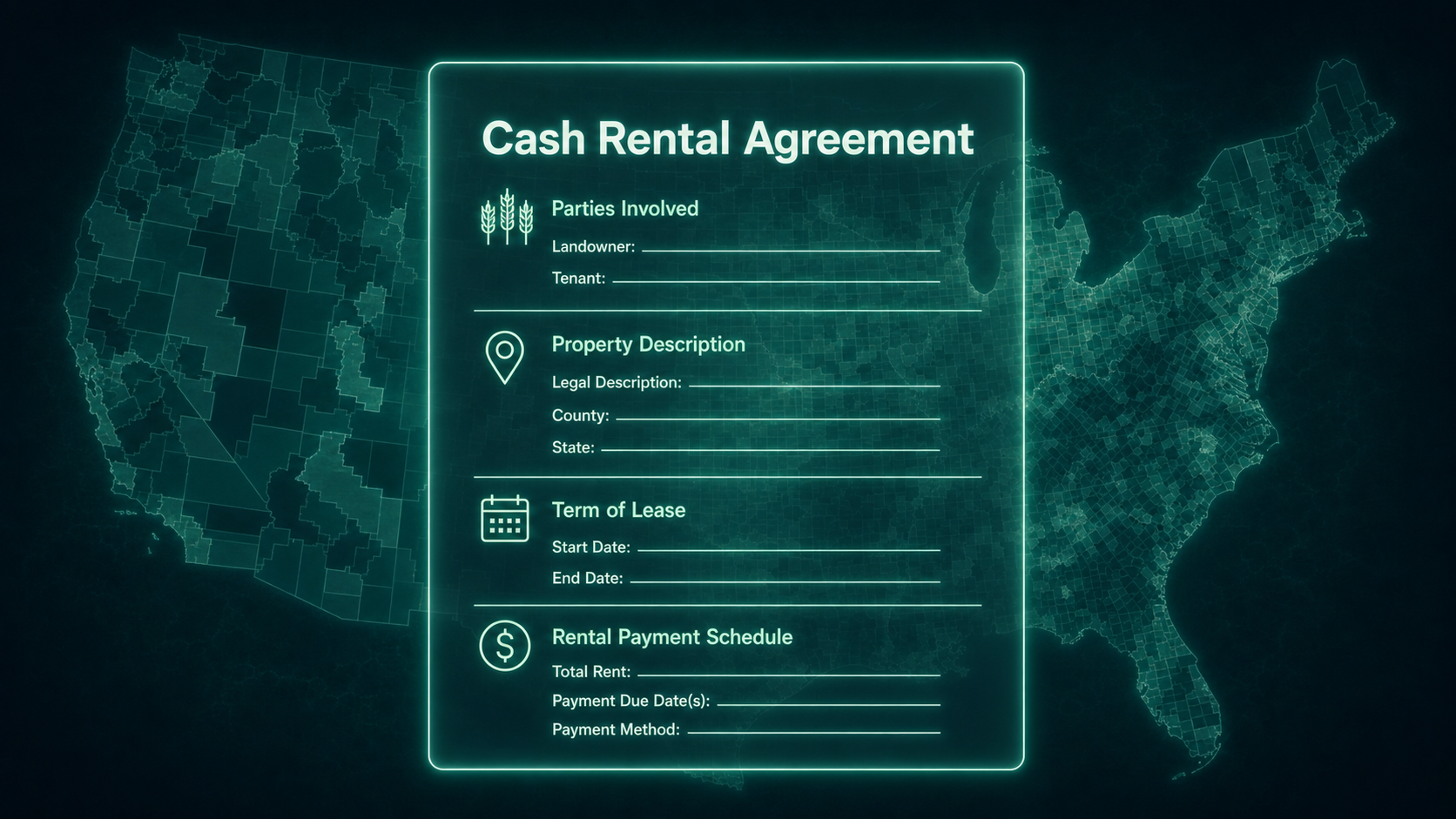
![Illinois Land Lease Agreement Template]()
Illinois Land Lease Agreement Template
-
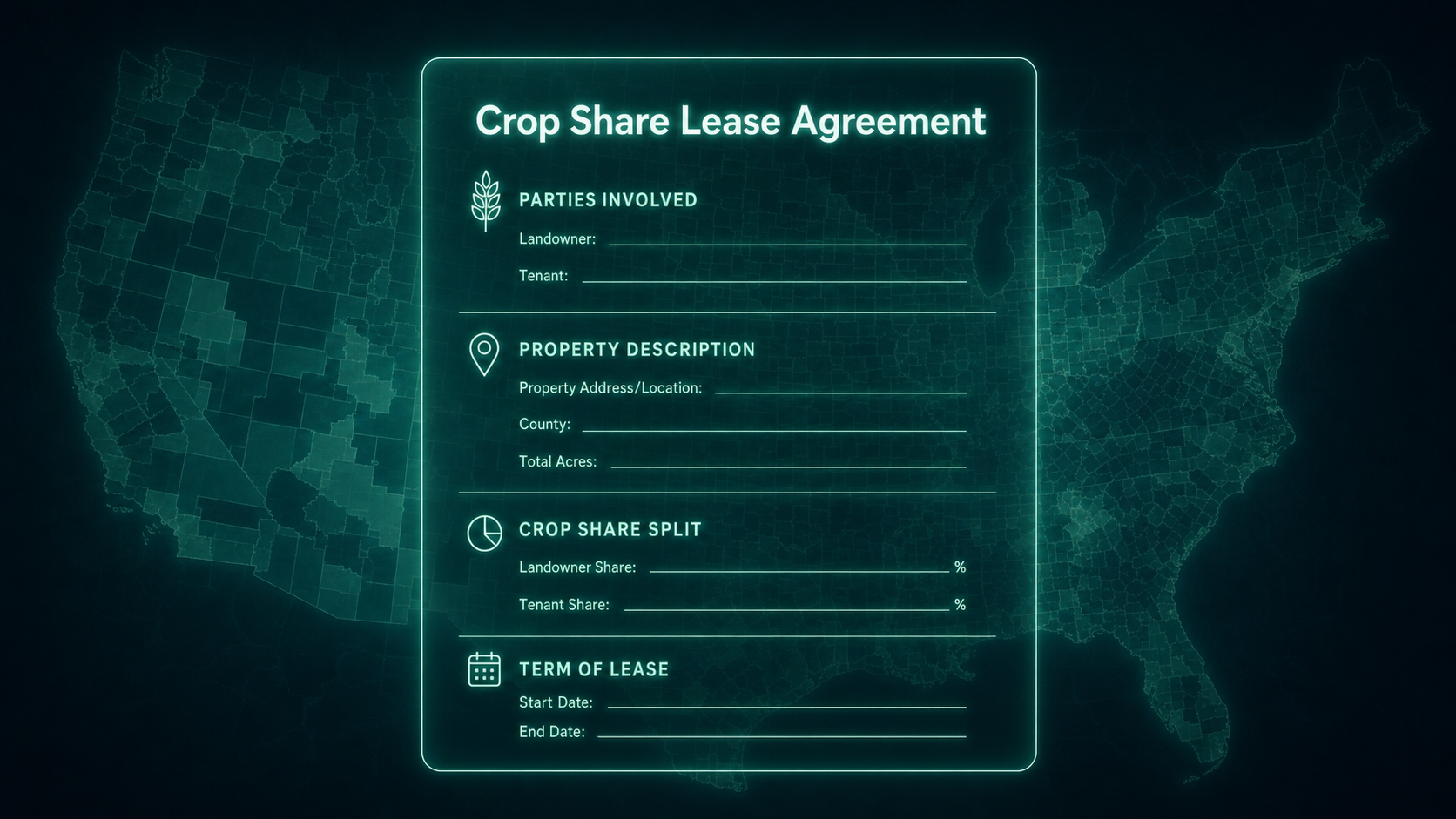
![Illinois Crop Share Lease from Oaken]()
Illinois Crop Share Lease
-
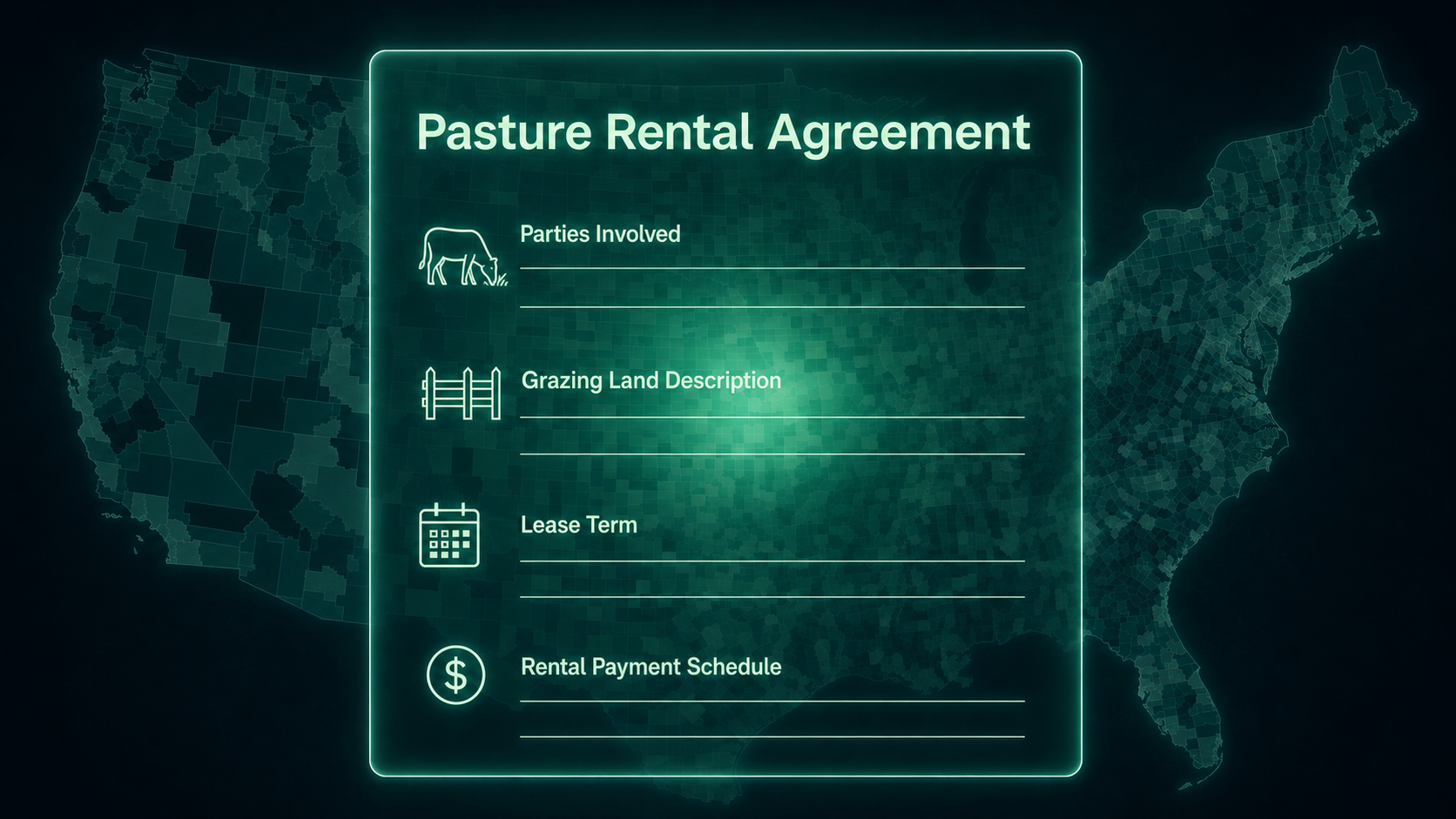
![Pasture Lease Agreement Illinois from Oaken]()
Illinois Pasture Lease
-
![Illinois state lease bundle from Oaken]()
Illinois state lease bundle

Renegotiating your Illinois farmland lease and rent? Explore our calculators.
-
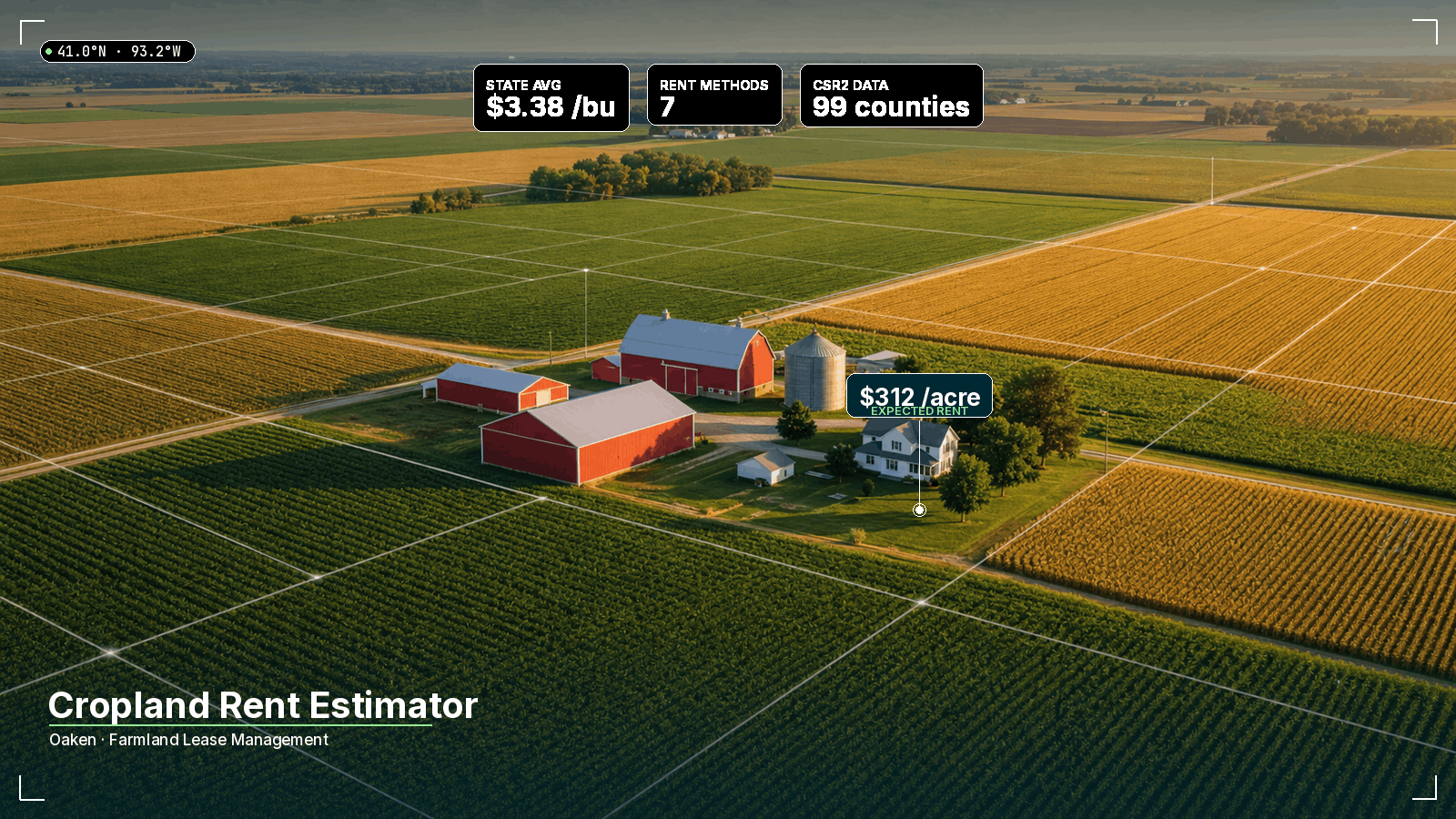
![Illinois Farmland Cash Rental Rate Lease calculator]()
Illinois Farmland Cash Rental Rate Lease calculator
Calculate fair, data-driven rental rates for your agricultural land. This calculator uses official county historical data and flexible cash rent models to help landowners and farm operators determine market-aligned lease rates, adapt to changing crop yields, and structure equitable agreements.
-
![Illinois Flexible rent estimator Oaken]()
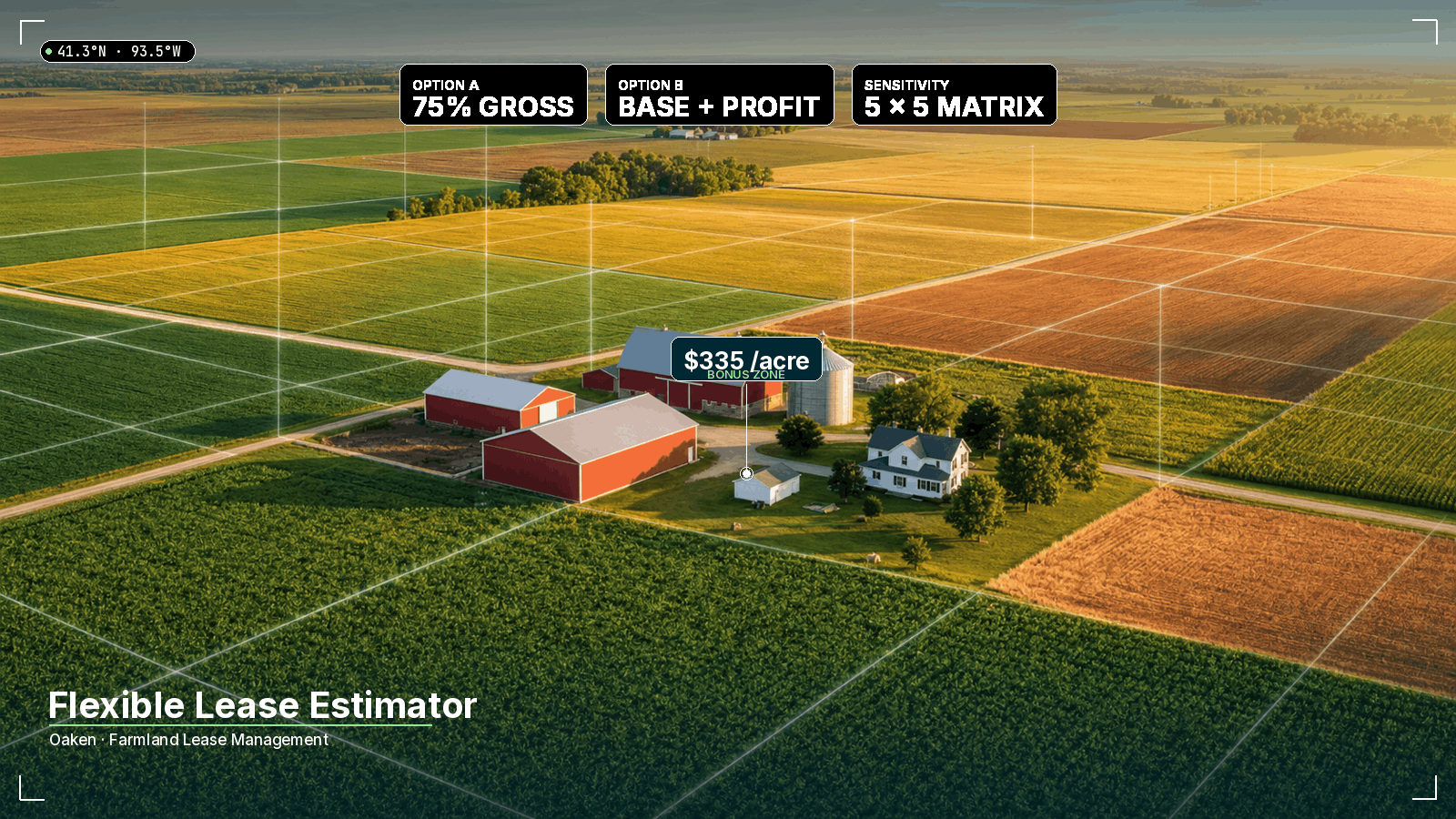
Illinois Flex rent Calculator
A flex rent calculator helps landowners and farm operators structure transparent, risk-sharing farmland leases that dynamically adjust payments based on actual yields, prices, or gross revenues. By incorporating real-time agricultural benchmarks, flexible lease models protect profit margins during downturns while enabling shared upside during high-yield harvest seasons.
-
![Illinois Pasture and Hay rent calculator Oaken]()
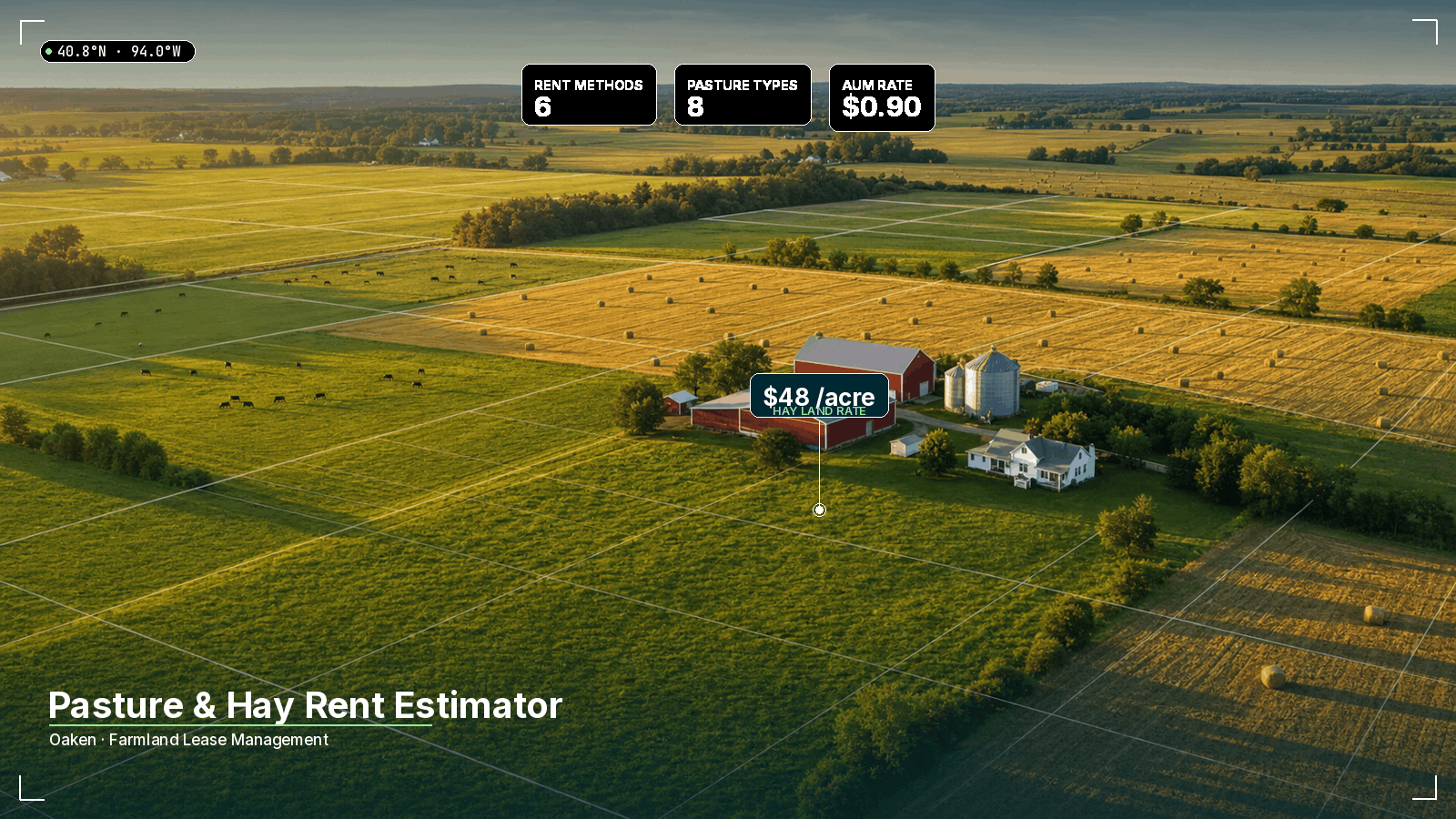
Illinois Pasture Rental and Lease Rate Calculator
Determine fair, market-based rental rates for grazing land . This calculator incorporates historical county data, stocking rates, and animal unit equivalents to help landowners and livestock producers structure transparent, equitable pasture lease agreements.
-
![Illinois Grain Storage Rental and Lease Rate Calculator]()
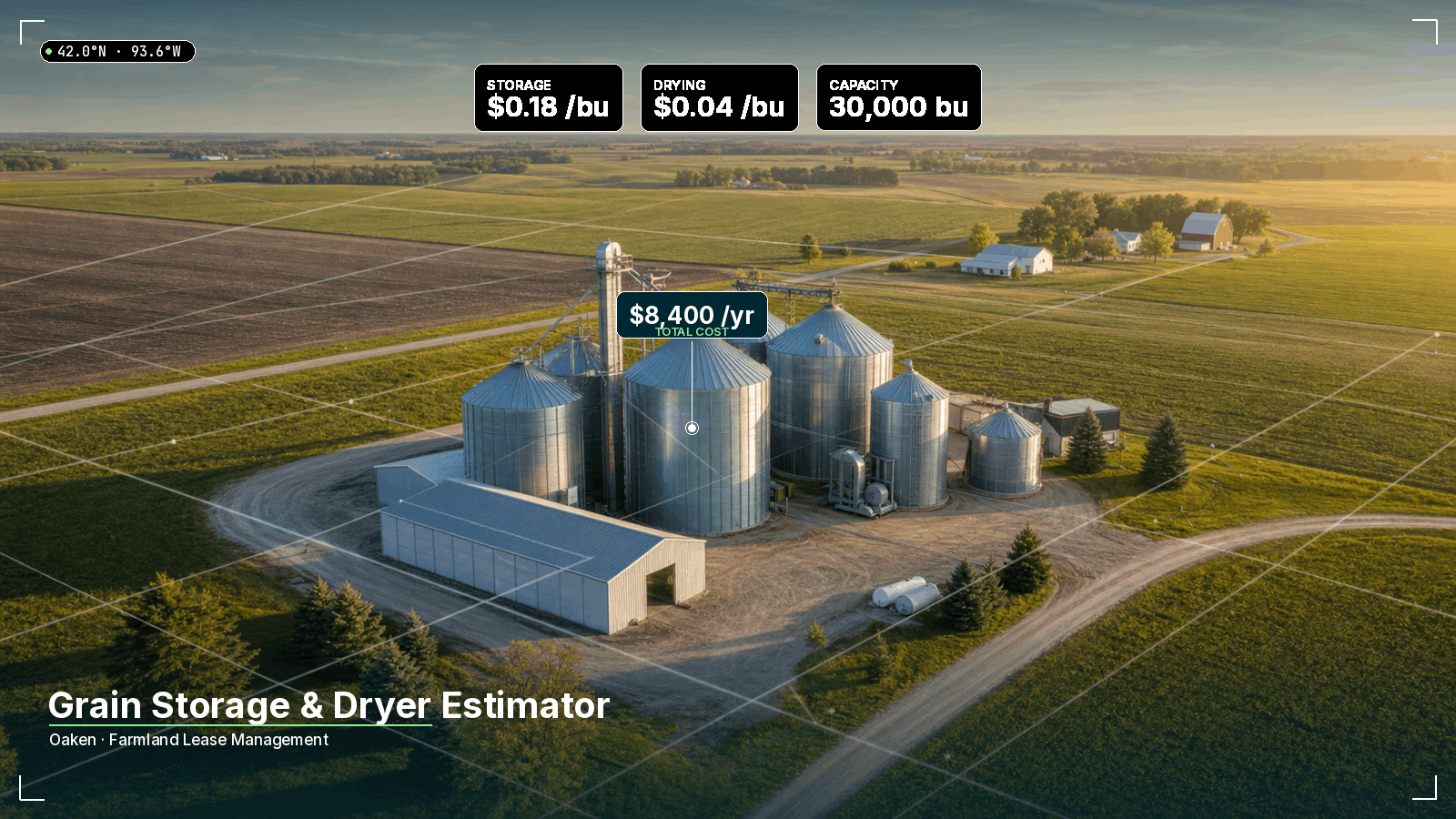
Illinois Grain Storage Rental and Lease Rate Calculator
Determine fair, market-based rental rates for grain storage facilities. This calculator factor in bin capacity, aeration, drying capabilities, and local utility costs to help landowners and farm operators structure clear, equitable grain storage lease agreements.
-
![Illinois Livestock Building Cash Rental Rate and Lease Calculator]()
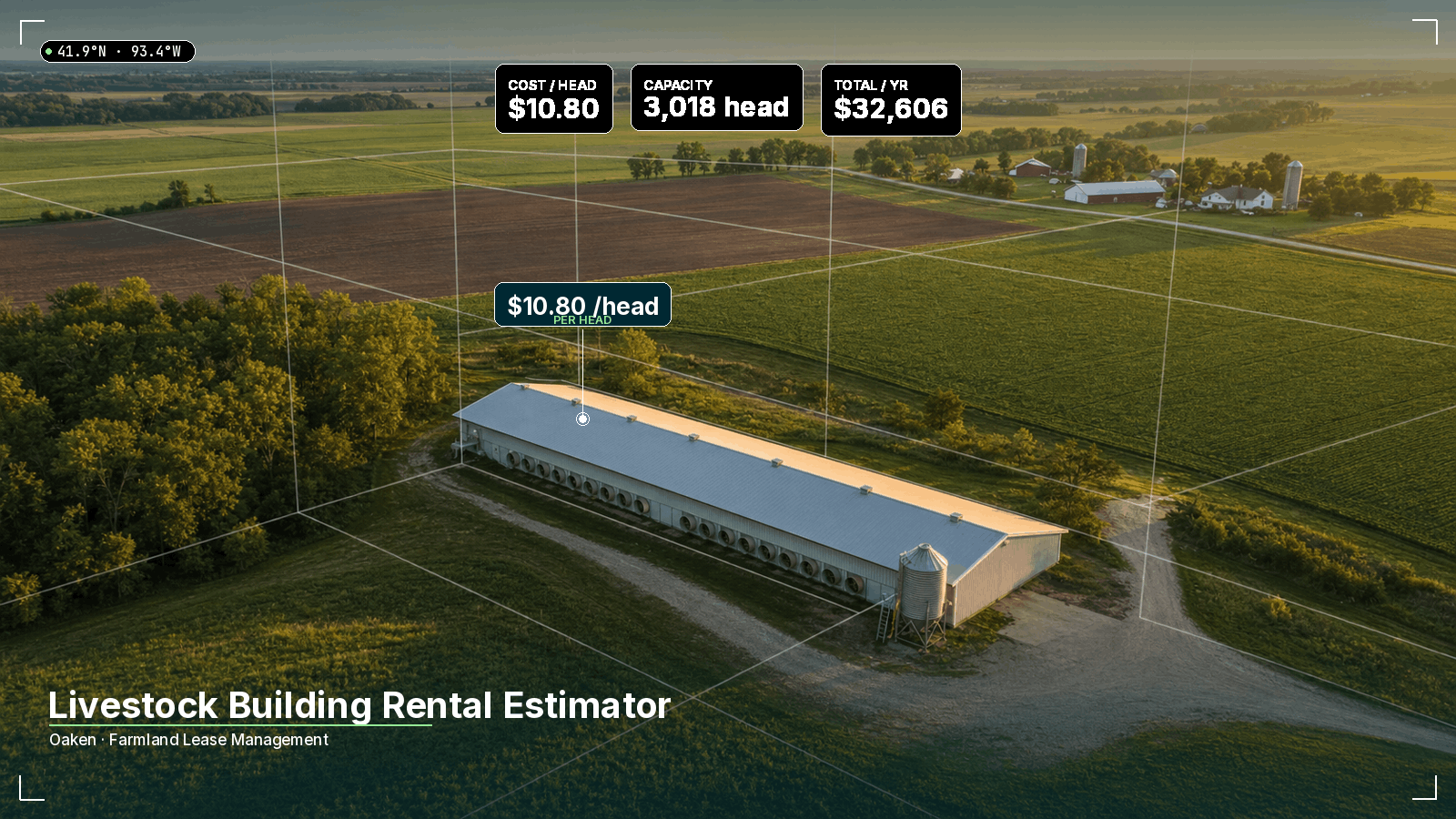
Illinois Livestock Building Cash Rental Rate and Lease Calculator Item
Determine fair, market-aligned rental rates for livestock housing and feeding facilities. This calculator accounts for facility type, head capacity, manure handling agreements, and utility responsibility to help barn owners and livestock operators structure equitable lease terms.
Managing multiple Illinois farms? Ditch the binder and excel
Frequently Asked Questions
-
In Illinois, fixed cash rent leases are commonly split into two installments: a spring payment (often around March 1) and a fall payment (often around November 1, following harvest). A typical split is 50/50. However, some Illinois landowners require 100% of the rent paid upfront in the spring to eliminate non-payment risk. When opting for upfront payments, tenants often negotiate a slightly reduced rate to offset the added interest costs of borrowing funds before crops are harvested.
-
Most Illinois cash rent agreements operate on a one-year lease term. The advantage of a one-year lease is flexibility, allowing both parties to adjust rental rates annually based on shifting crop prices and market conditions. The trade-off is the recurring need for renegotiation every fall or winter. Multi-year leases (three to five years) offer operational stability, though they usually require flexible rent clauses to stay equitable.
-
Fixed cash leases are typically negotiated in the late fall or winter preceding the crop year. Because yields and market prices for the upcoming season are unknown at signing, lease negotiations rely heavily on past economic returns. This creates a natural lag where cash rent rates reflect previous years' profitability rather than current market conditions, which can create financial pressure on operators during market downturns.
-
Under a standard fixed cash rent lease agreement in Illinois, the operator (tenant) is fully responsible for all farm production and marketing decisions. The operator supplies the crop inputs, machinery, and labor, assuming all operating and yield risks while retaining full control over input selection and grain sales.
-
Paying rent entirely upfront in the spring forces farm operators to cover input costs and rent prior to cash inflow from harvest, often requiring short-term operating loans that incur interest expenses. To manage this, operators can track payment schedules digitally to anticipate capital needs and negotiate adjusted rental rates or split-payment schedules that better align with harvest cash flows.
-
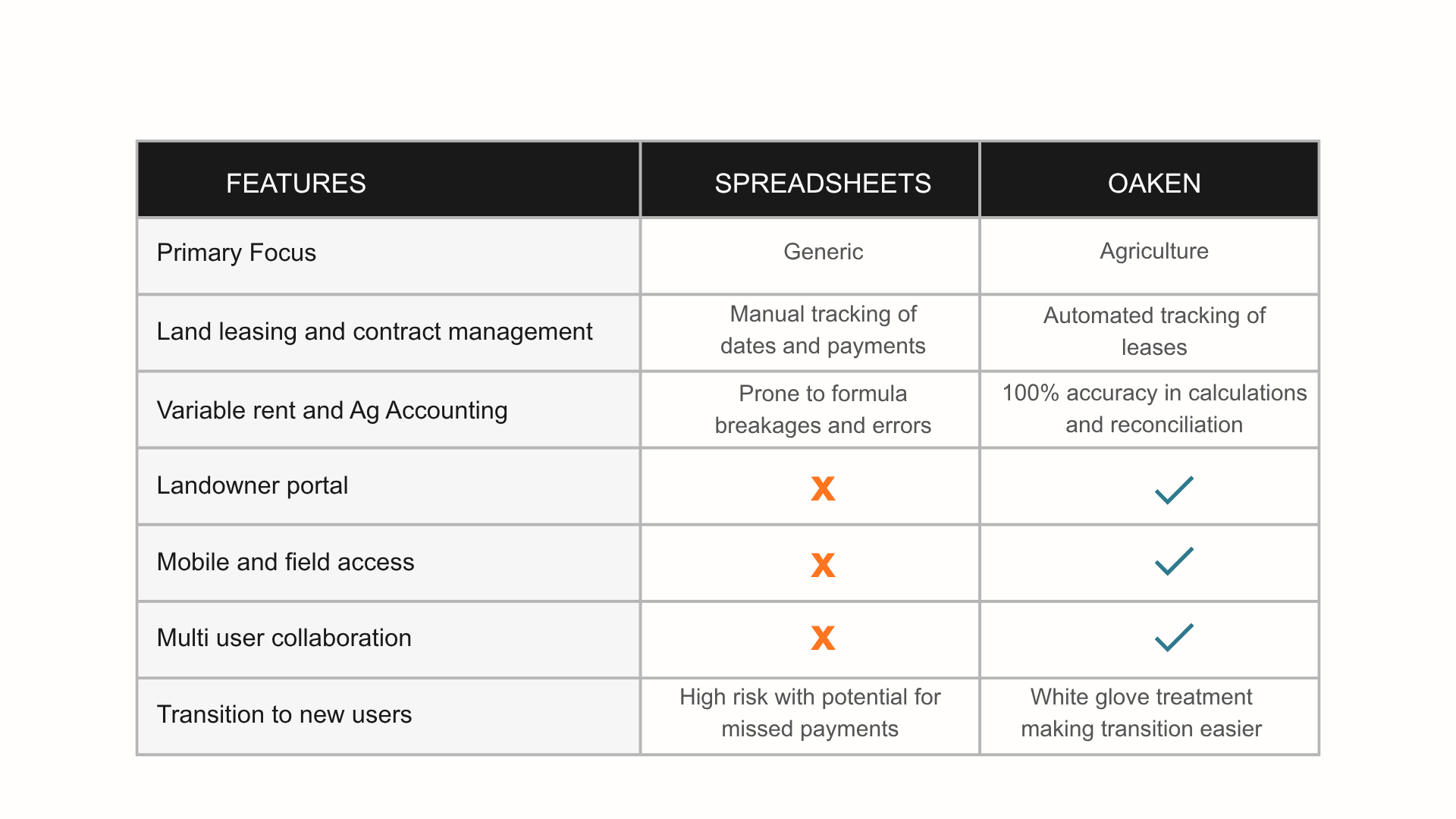
Modern farm operations often handle multiple lease deadlines, varying payment structures, and changing landowner relationships. Oaken.ag's farmland lease management platform replaces manual spreadsheets by centralizing lease contracts, tracking expiration dates, automating scheduled payment reminders, and maintaining complete records for land partners and succession planning.
-
Agricultural land in NC often involves separate "bundle of sticks" rights, such as hunting leases, timber access, or water rights. Oaken allows land managers to upload custom clauses, specify severed land rights, and track secondary usage contracts alongside primary agricultural leases so all property-related obligations remain centralized in one system.
Get started today.
DisclaimerThe information, agreement templates, calculators, and other tools provided on this platform by Oaken are for general informational and educational purposes only and do not constitute legal, financial, or professional advice. While Oaken strives to keep information current and accurate, templates and calculators are generic guidelines and may not reflect specific state, local, or individual circumstances. Oaken makes no representations or warranties of any kind, express or implied, regarding the accuracy, completeness, or legal sufficiency of any content provided. Use of Oaken’s templates and tools does not create an attorney-client or fiduciary relationship. Users are strongly advised to consult with a qualified attorney or legal professional for clarification, advice, or customization before executing any legal documents or making decisions based on calculations provided on this site. Oaken assumes no responsibility or liability for any errors, omissions, or outcomes resulting from the use of these materials.