

Florida Farmland Lease Agreement Templates & Farm Rent Calculators
Download your Florida Farmland Lease template
-
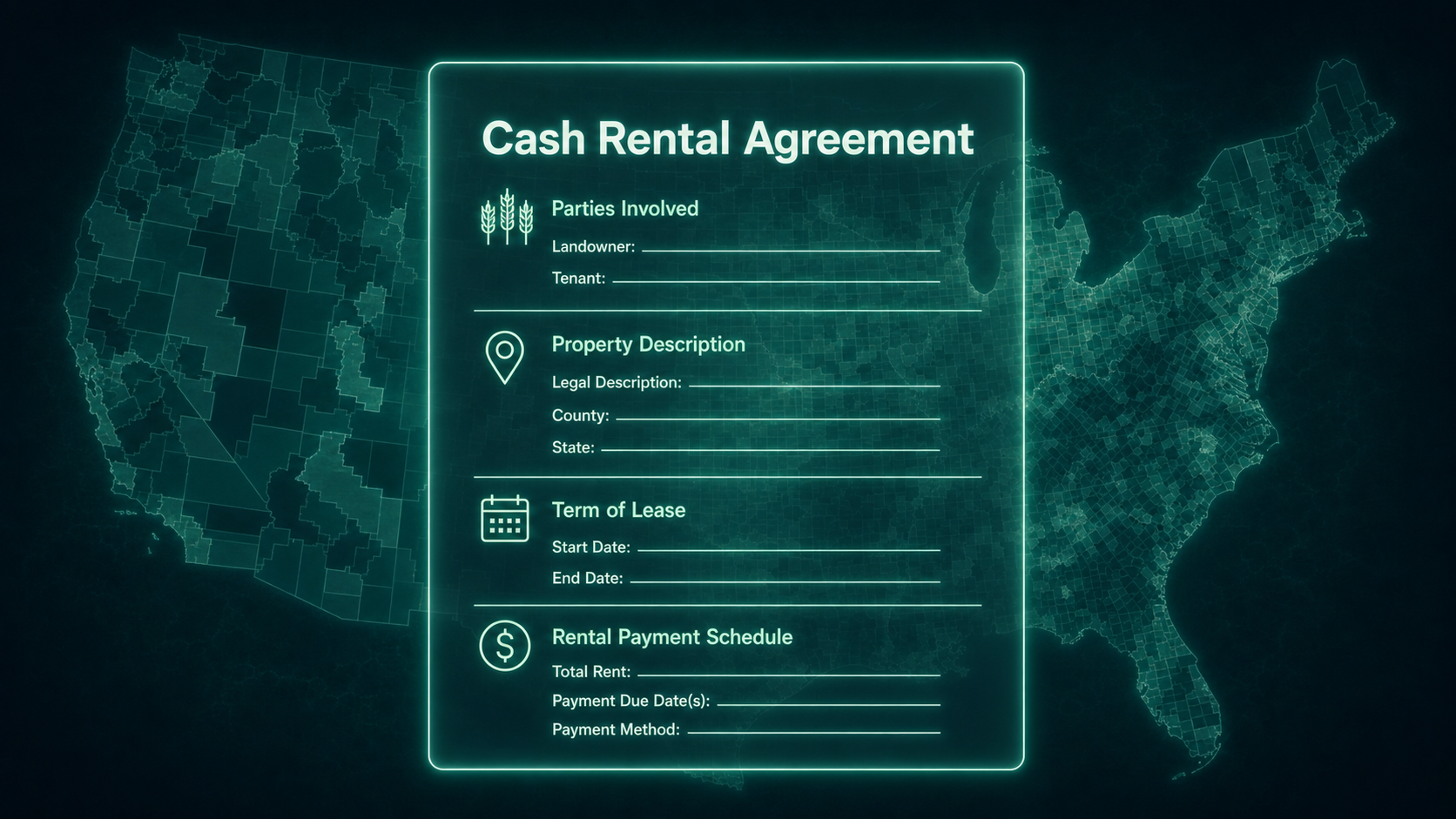
![Florida Land Lease Agreement Template from Oaken]()
Florida Land Lease Agreement Template
-
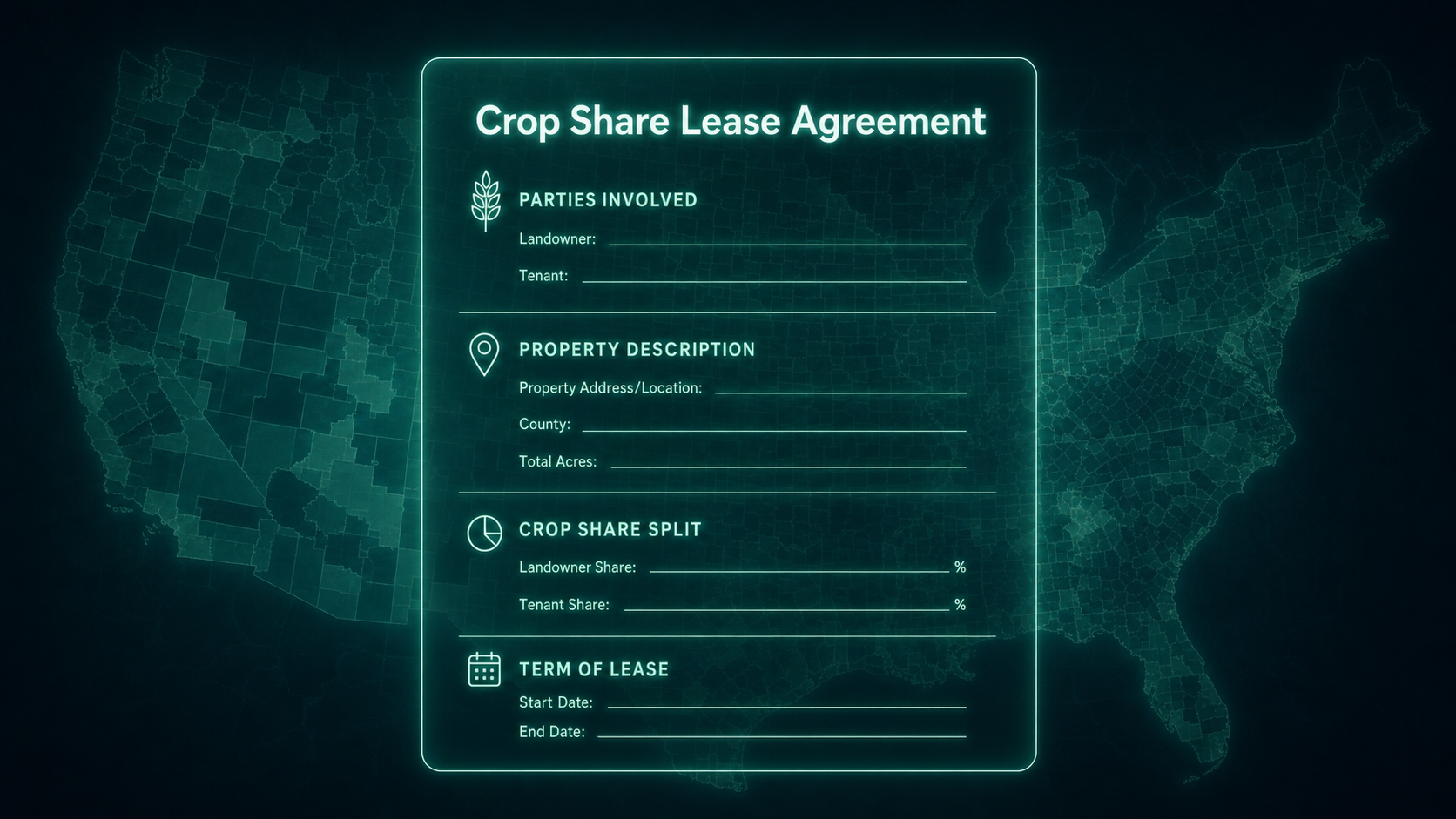
![Florida Crop Share Lease from Oaken]()
Florida Crop Share Lease
-
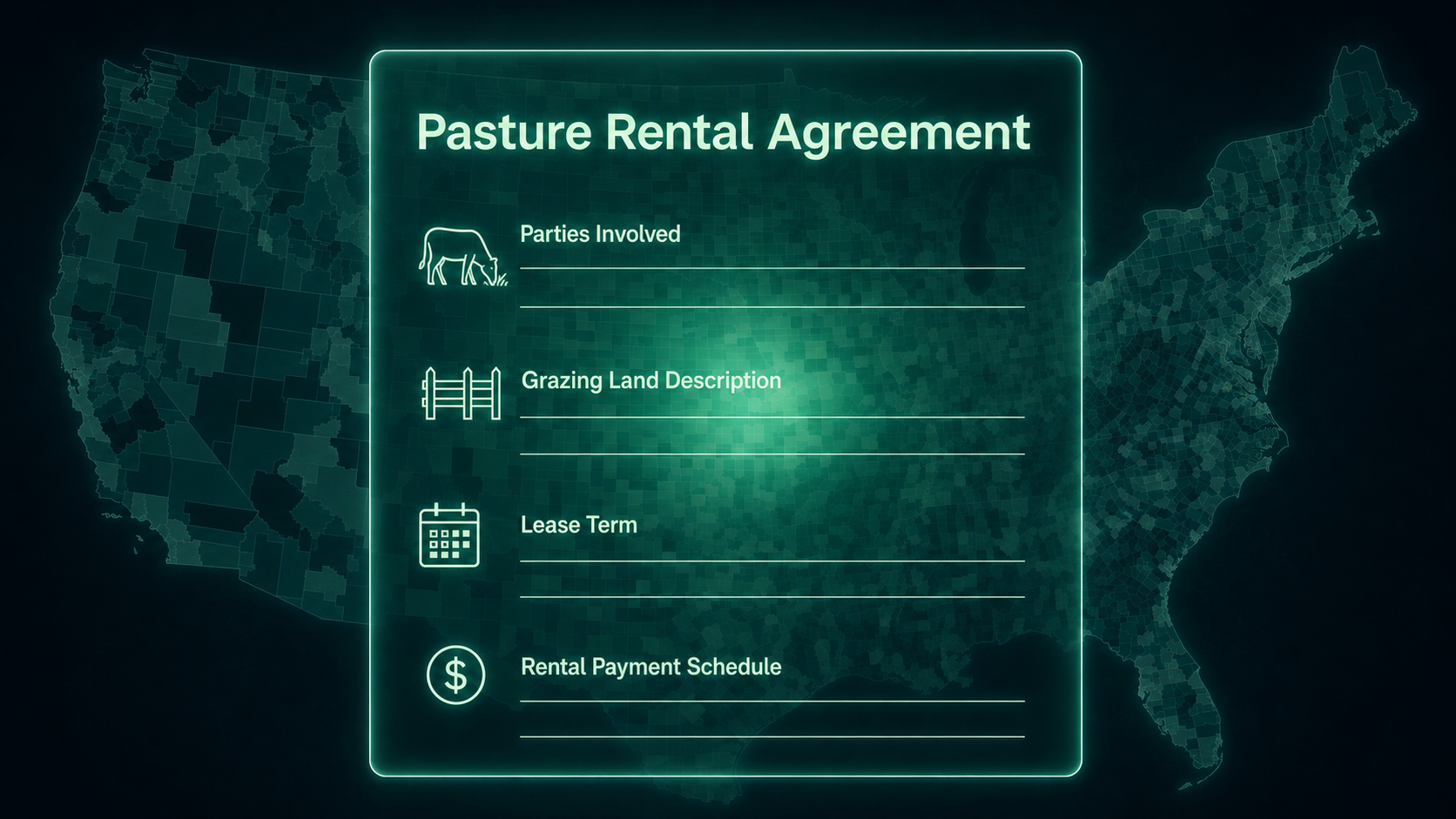
![Pasture Lease Agreement Florida from Oaken]()
Florida Pasture Lease
-
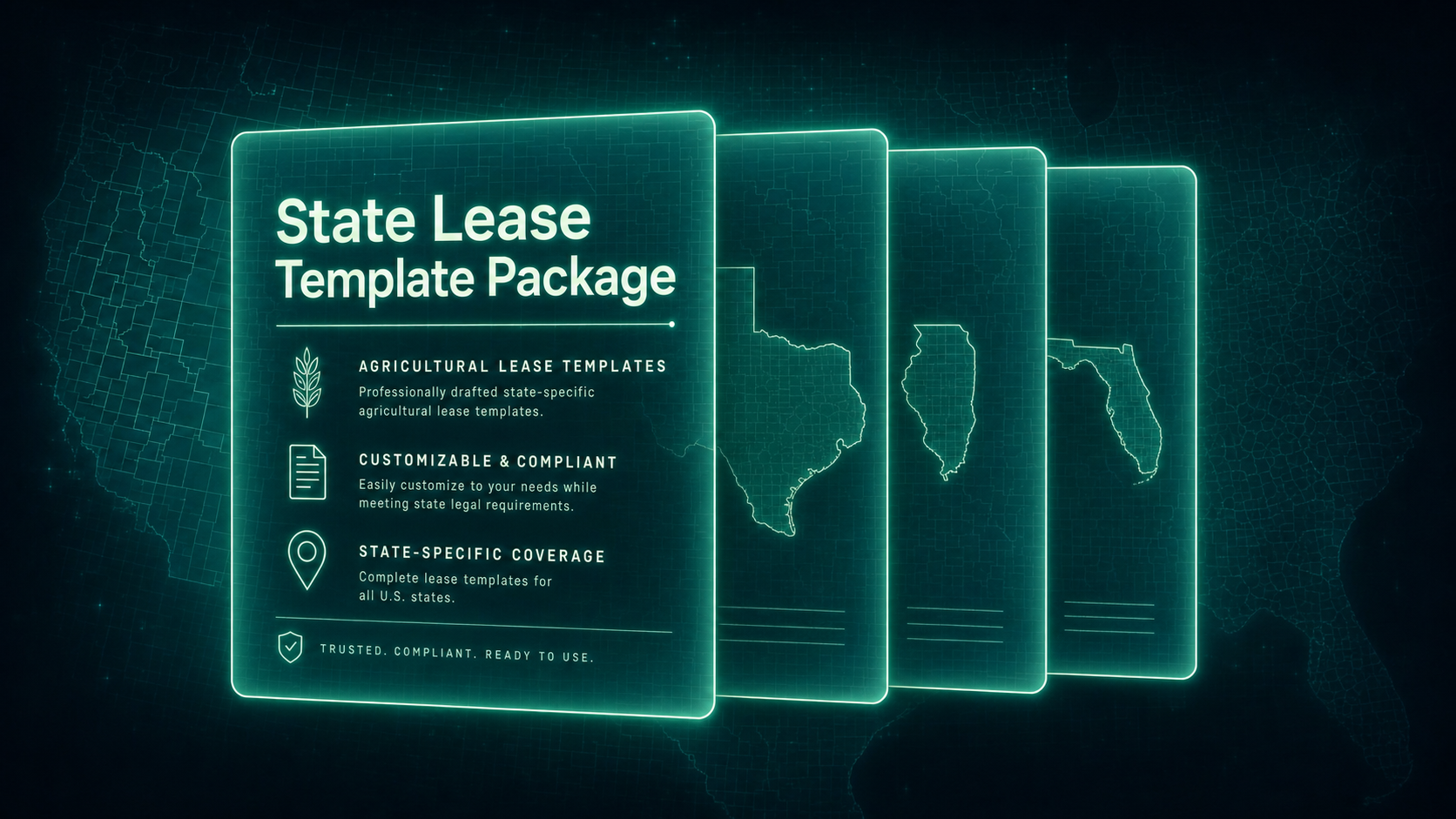
![Florida state lease bundle from Oaken]()
Florida state lease bundle
Renegotiating your Florida farmland lease and rent? Explore our calculators.
-
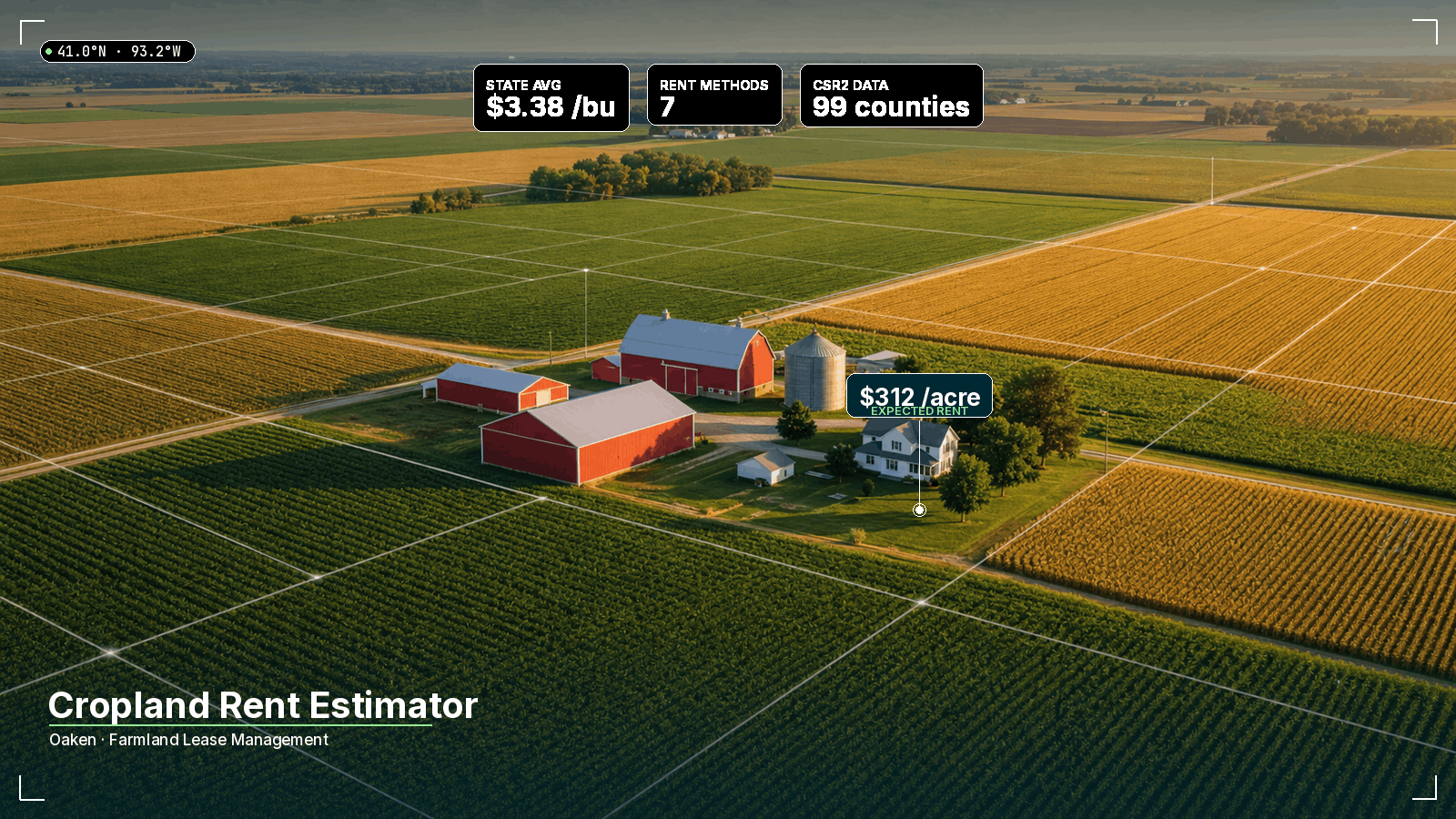
![Florida Farmland Cash Rental Rate Lease calculator]()
Florida Farmland Cash Rental Rate Lease calculator
Calculate fair, data-driven rental rates for your agricultural land. This calculator uses official county historical data and flexible cash rent models to help landowners and farm operators determine market-aligned lease rates, adapt to changing crop yields, and structure equitable agreements.
-
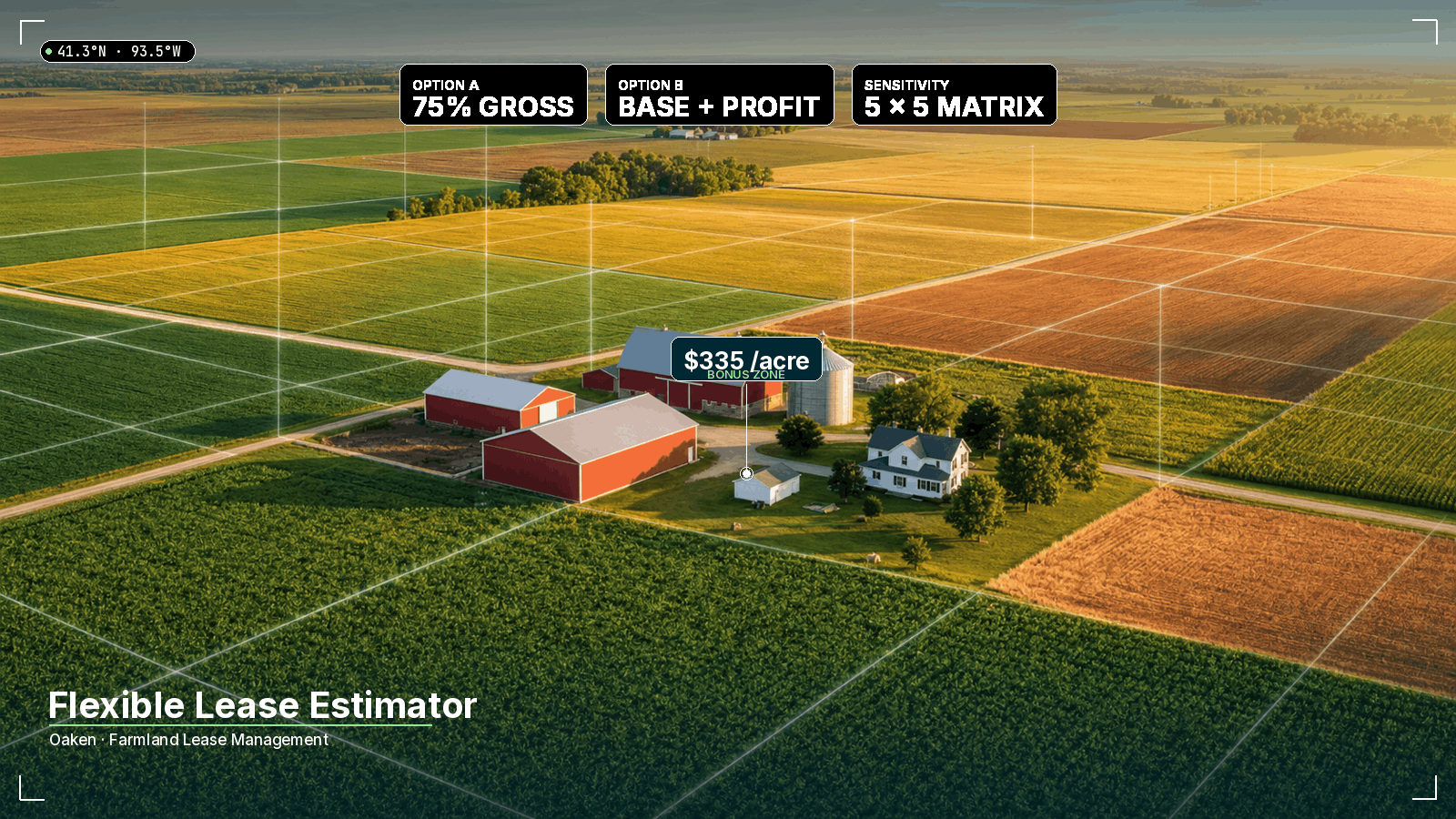
![Florida Flexible rent estimator Oaken]()
Florida Flex rent Calculator
A flex rent calculator helps landowners and farm operators structure transparent, risk-sharing farmland leases that dynamically adjust payments based on actual yields, prices, or gross revenues. By incorporating real-time agricultural benchmarks, flexible lease models protect profit margins during downturns while enabling shared upside during high-yield harvest seasons.
-
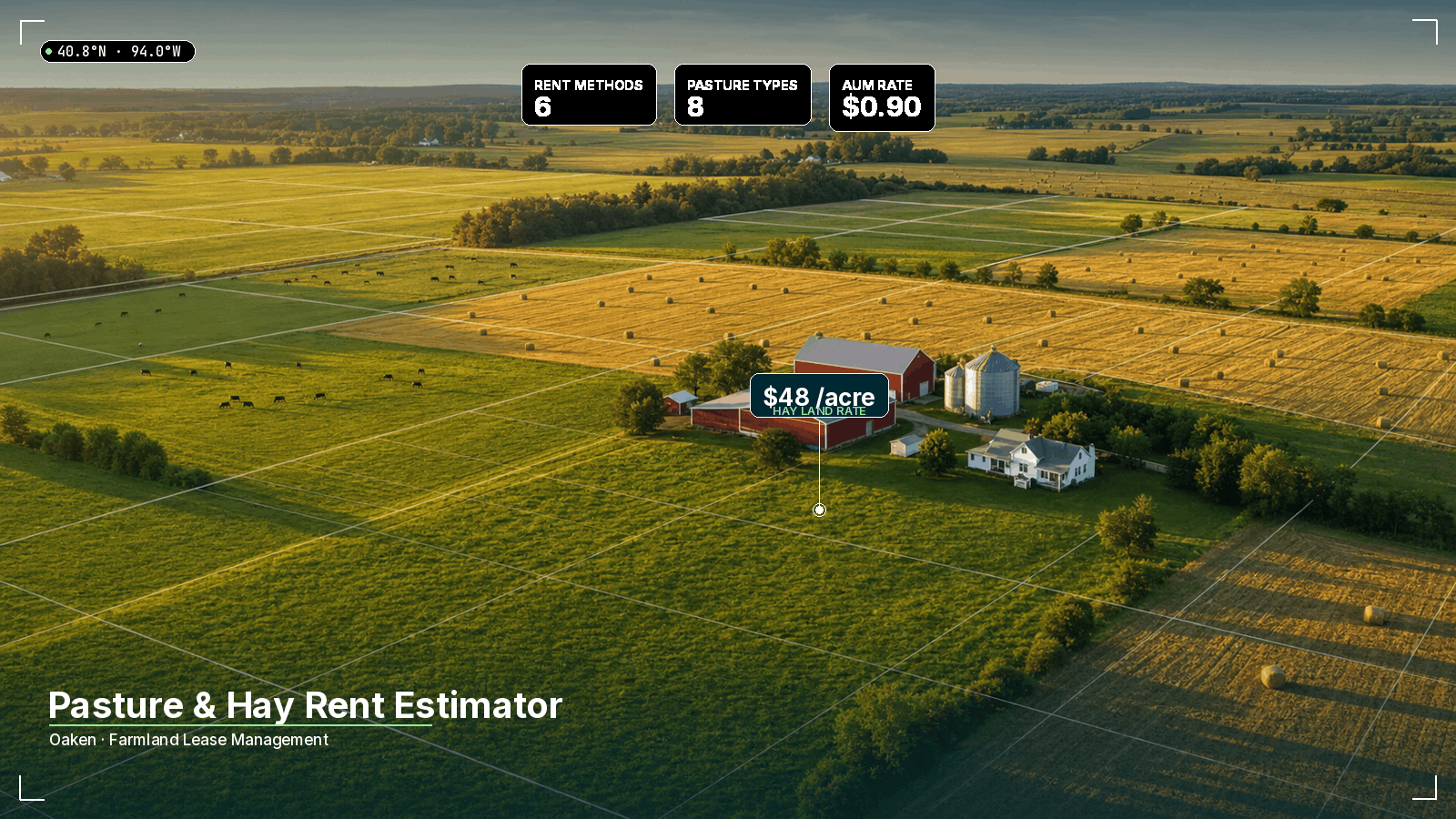
![Florida Pasture and Hay rent calculator Oaken]()
Florida Pasture Rental and Lease Rate Calculator
Determine fair, market-based rental rates for grazing land . This calculator incorporates historical county data, stocking rates, and animal unit equivalents to help landowners and livestock producers structure transparent, equitable pasture lease agreements.
-
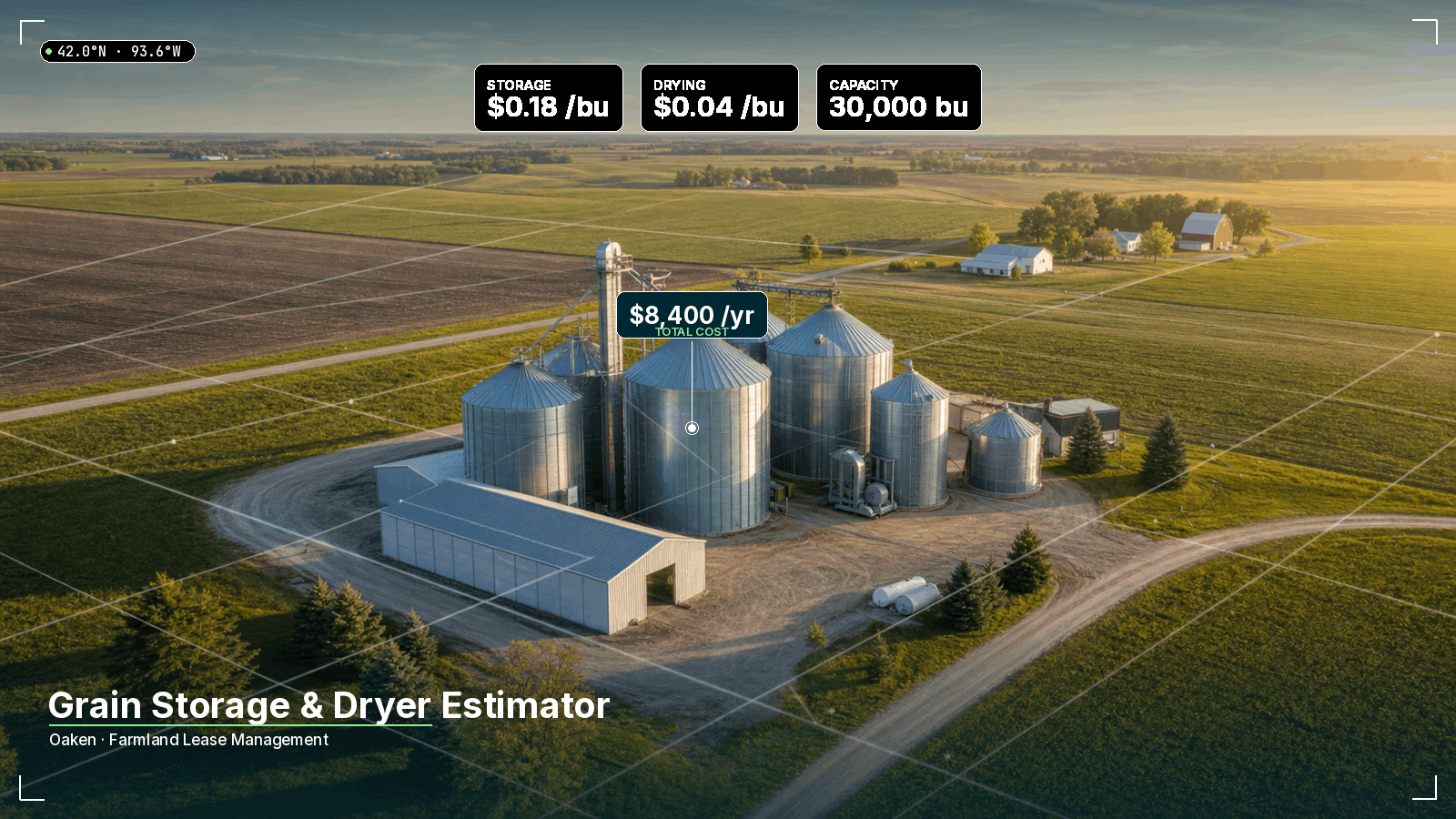
![Florida Grain Storage Rental and Lease Rate Calculator]()
Florida Grain Storage Rental and Lease Rate Calculator
Determine fair, market-based rental rates for grain storage facilities. This calculator factor in bin capacity, aeration, drying capabilities, and local utility costs to help landowners and farm operators structure clear, equitable grain storage lease agreements.
-
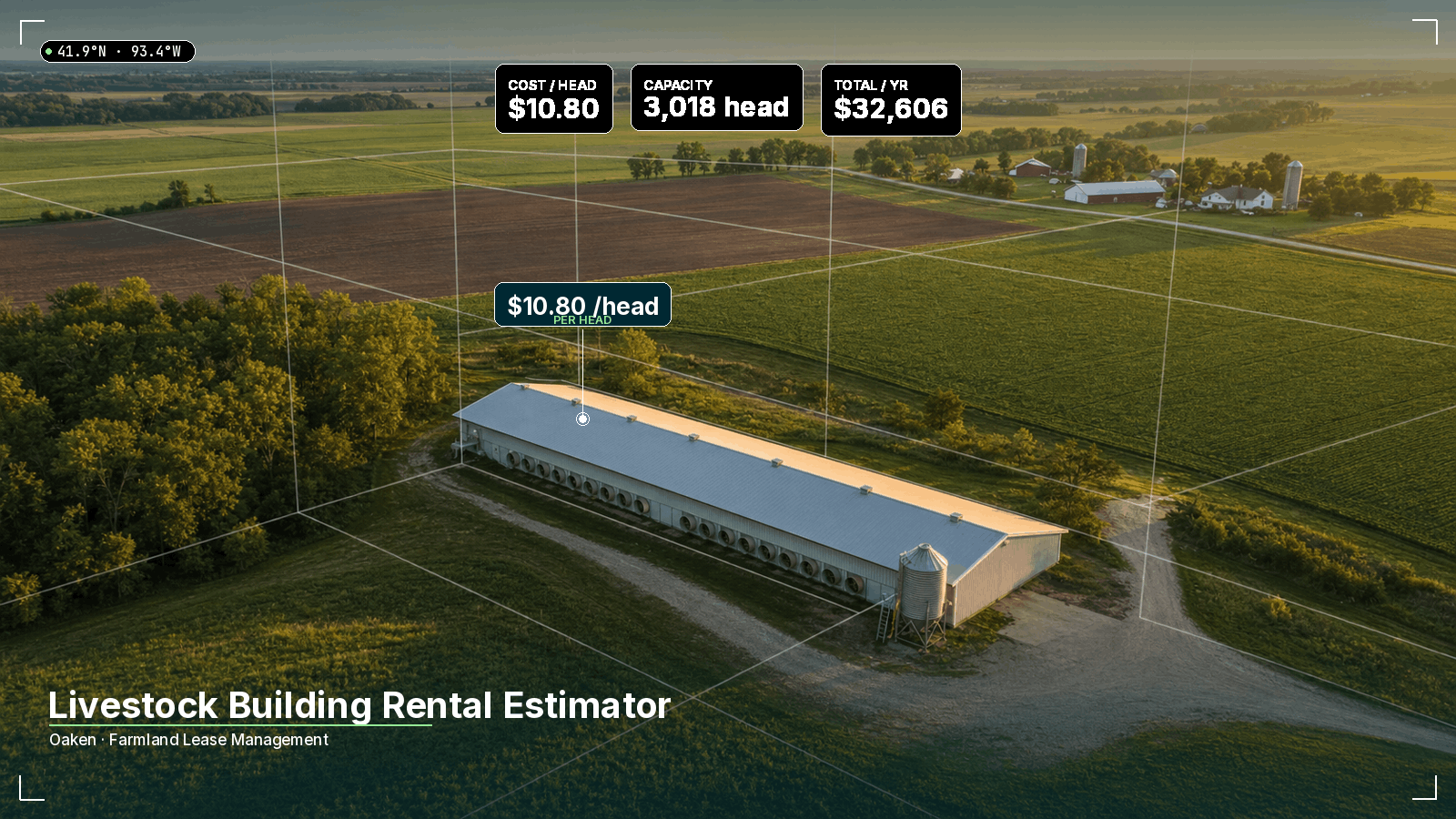
![Florida Livestock Building Cash Rental Rate and Lease Calculator]()
Florida Livestock Building Cash Rental Rate and Lease Calculator Item
Determine fair, market-aligned rental rates for livestock housing and feeding facilities. This calculator accounts for facility type, head capacity, manure handling agreements, and utility responsibility to help barn owners and livestock operators structure equitable lease terms.
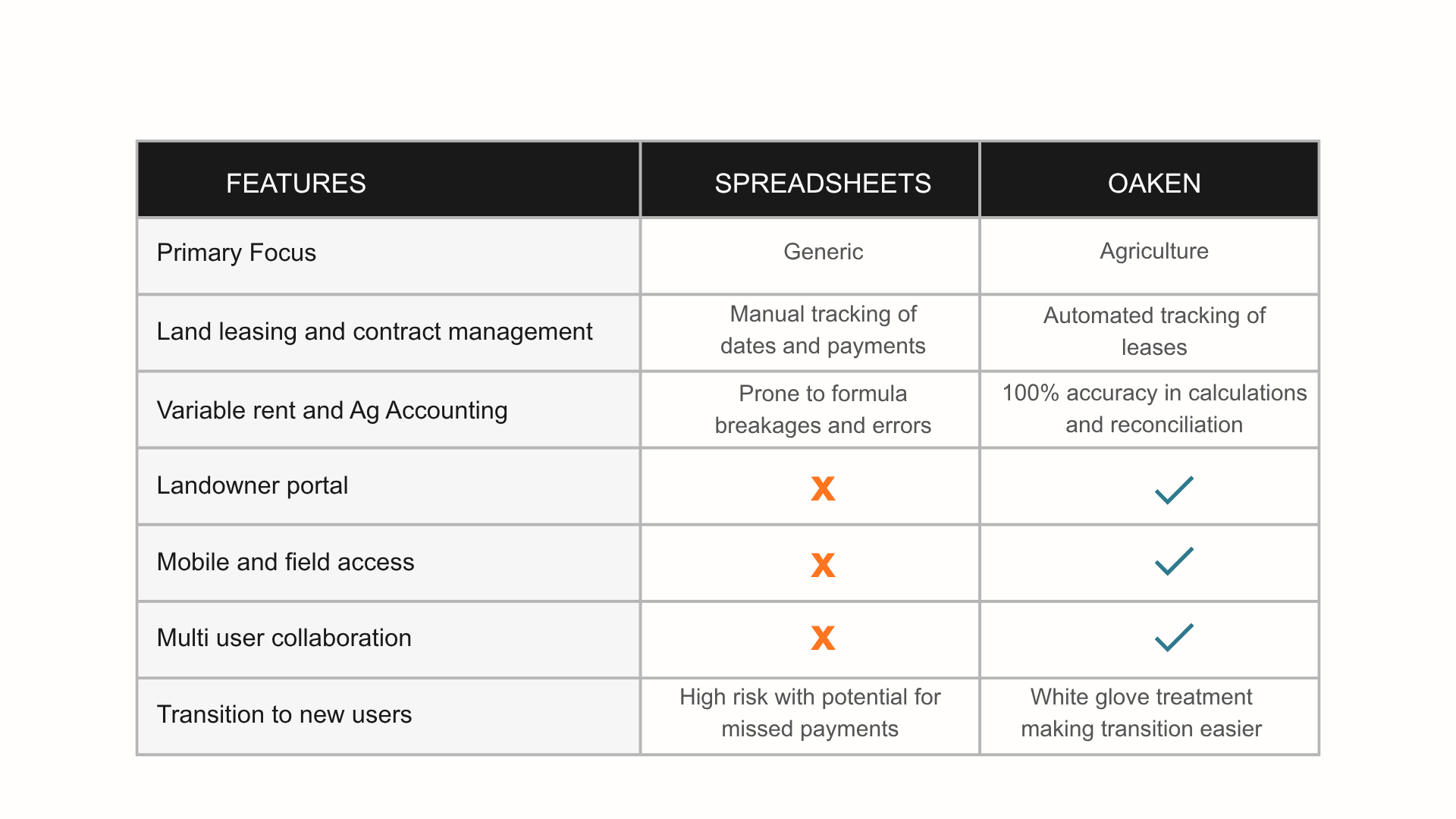
Managing multiple Florida farms? Ditch the binder and excel
Frequently Asked Questions
-
Under Florida law (Florida Statutes § 689.01), any farmland lease lasting longer than one year must be in writing and signed by the party to be charged in the presence of two subscribing witnesses to be legally enforceable. Valid contracts must clearly identify the landlord and tenant, provide a legal property description, outline rent amounts and payment dates (cash, flex, or crop-share), and specify the term duration.
-
Unlike Midwestern agricultural leases with fixed spring dates, Florida farmland lease schedules depend heavily on regional cropping systems. Operations in North Florida (row crops like peanut, cotton, or corn) often run on standard calendar-year terms (January 1 to December 31) or fall-to-fall cycles. Conversely, winter vegetable, sugarcane, and citrus operations in Central and South Florida frequently align lease start dates with specialized planting and harvesting windows (e.g., September 1 through August 31).
-
For written fixed-term leases, the contract expires automatically on the end date unless specific notice terms are written into the agreement. For year-to-year tenancies without a fixed end date, Florida Statutes § 83.03 requires written notice to quit delivered at least 60 days prior to the end of any annual period. Notices should be delivered via certified mail or served directly with proof of receipt to protect against holdover claims.
-
Florida producers and agricultural landowners utilize four core lease models:
Fixed Cash Rent: A predictable, fixed dollar fee per acre paid annually or semi-annually.
Flexible Cash Rent: Rent that adjusts dynamically based on market commodity prices, harvest yield, or weather-impacted output.
Crop Share: Landowners and operators share input costs (seed, fertilizer, chemicals, irrigation) and divide gross crop sales based on an agreed percentage.
Pasture and Cattle Grazing Lease: Charged per acre, per head, or on an Animal Unit Month (AUM) basis.
-
Farmland rental rates across Florida vary widely based on soil capability, irrigation infrastructure, and water rights access. Key valuation factors include:
Water & Drainage Infrastructure: Land equipped with permitted irrigation wells, tile drainage, or surface water access commands significantly higher rates than dryland acreage.
Crop Potential: Ground suitable for specialty crops (citrus, strawberries, fresh market vegetables) yields higher rates than pasture or timberland.
USDA NASS Historical Benchmarks: Regional statistical averages published by the USDA National Agricultural Statistics Service.
Location & Market Access: Proximity to processing facilities, packing houses, and major shipping routes along I-4, I-75, and I-95.
-
Property taxes are the legal obligation of the landowner. For water and infrastructure: landowners generally pay Water Management District (WMD) assessments and capital improvement costs for permanent pumps or well drilling. Tenants typically cover volumetric water usage, diesel/electricity for irrigation pumping, day-to-day upkeep of ditches and drip/pivot systems, and routine maintenance of farm roads and fences.
-
To safeguard long-term agricultural value, Florida leases require baseline soil nutrient and pH testing at inception so land is returned in equivalent condition. Leases also mandate that tenants maintain strict compliance with Florida Department of Agriculture and Consumer Services (FDACS) Best Management Practices (BMPs) to protect water quality, and manage water usage within existing WMD Consumptive Use Permits (CUPs) to avoid allocation loss or regulatory penalties.
Get started today.
DisclaimerThe information, agreement templates, calculators, and other tools provided on this platform by Oaken are for general informational and educational purposes only and do not constitute legal, financial, or professional advice. While Oaken strives to keep information current and accurate, templates and calculators are generic guidelines and may not reflect specific state, local, or individual circumstances. Oaken makes no representations or warranties of any kind, express or implied, regarding the accuracy, completeness, or legal sufficiency of any content provided. Use of Oaken’s templates and tools does not create an attorney-client or fiduciary relationship. Users are strongly advised to consult with a qualified attorney or legal professional for clarification, advice, or customization before executing any legal documents or making decisions based on calculations provided on this site. Oaken assumes no responsibility or liability for any errors, omissions, or outcomes resulting from the use of these materials.